Remote Video Astronomy
Practical solutions to questions when using video assisted Astronomy remotely
  • Home
  • RVA
  • Start Simple
  • Learn More
  • Expand
  • Downloads
  • Blog

The 2016 East Coast Video Astronomy Rendezvous (ECVAR)

10/13/2016

1 Comment

 
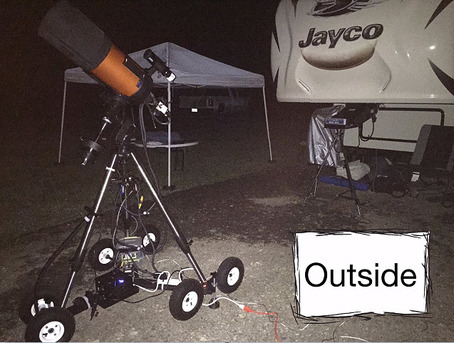
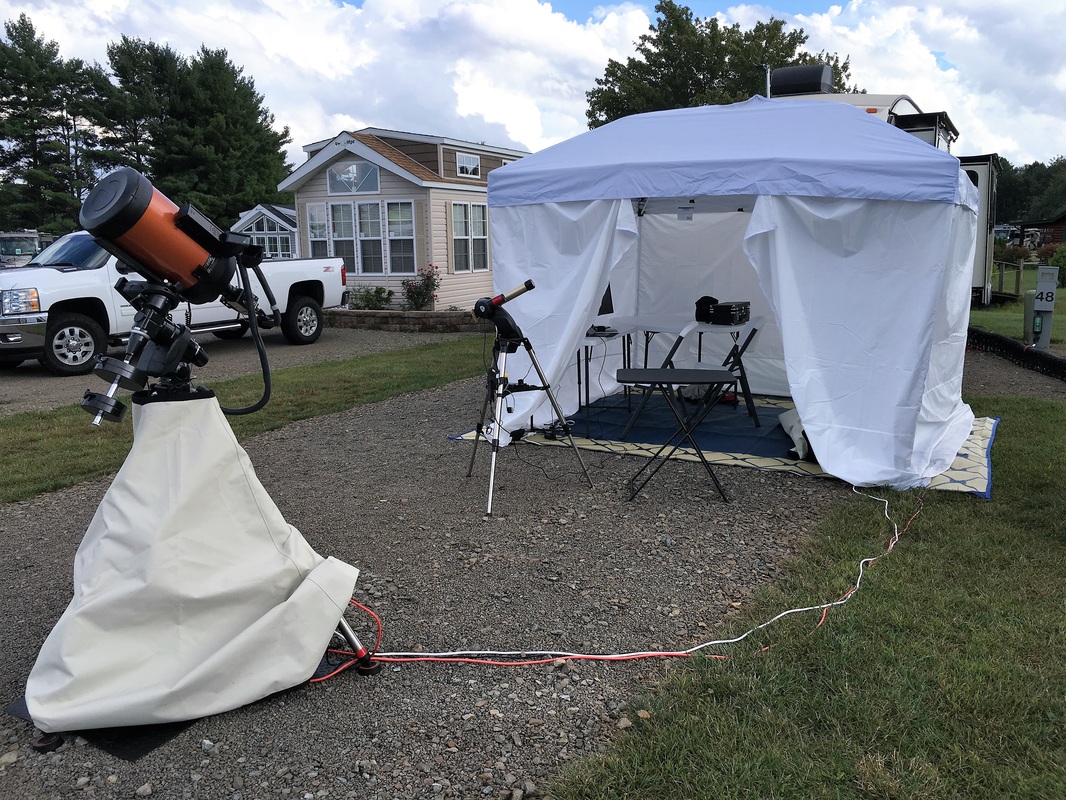
This year my wife, Sharon, and I again made the trek to Cool Breeze campground in Virginia and arrived a couple of days before the official start of ECVAR.  Unlike last year where we arrived after it started, this time we were the first ones there and I was able to take my time setting up our camper, outside tent and telescopes.
Picture
My first viewing was during the day using my MallinCam AGc camera on my Coronado PST with my small SkyProdigy Mount.

​
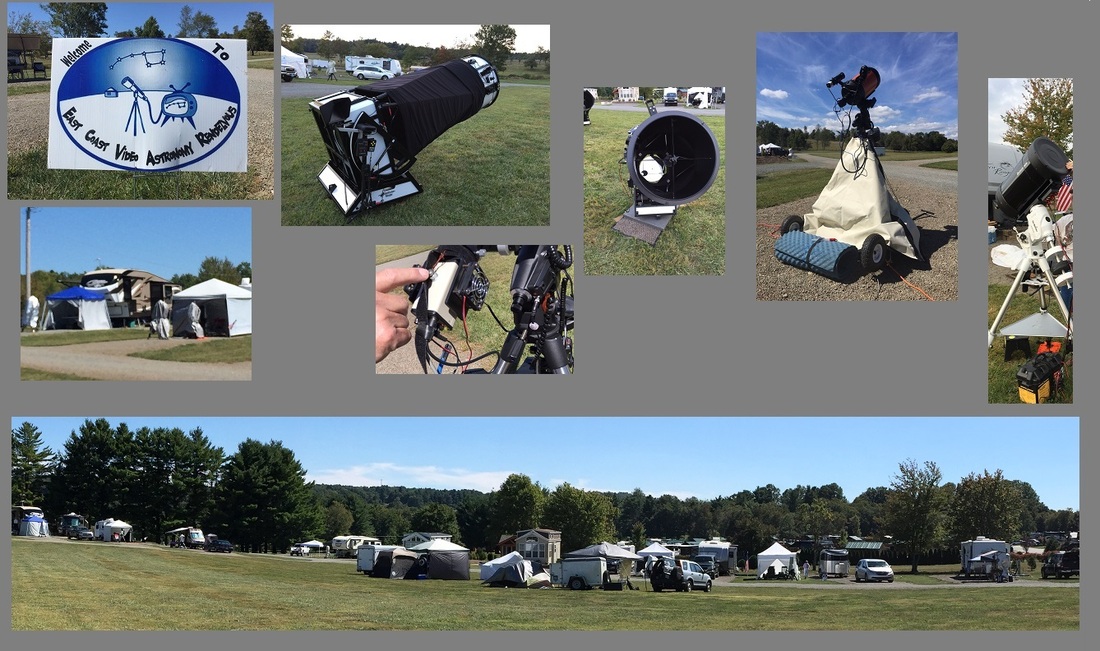
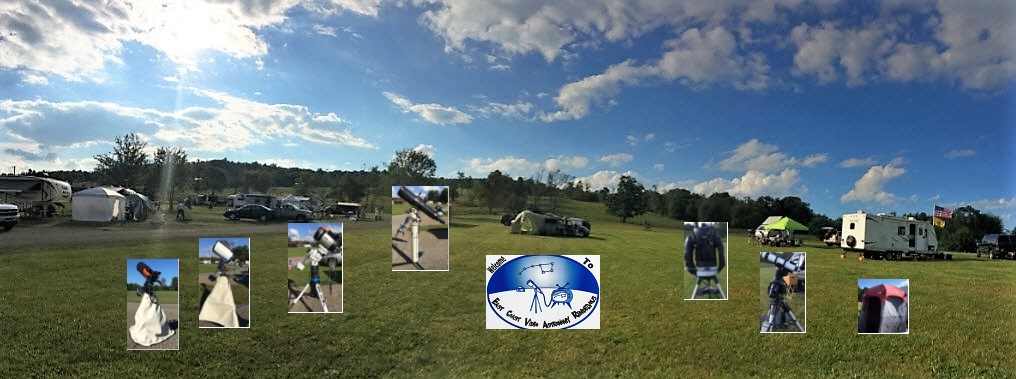
After a few days, the open area portion of the campground was once again occupied by a variety of video astronomers, telescopes, cameras, tents and campers.  It was good visiting with others, learning about their gear and picking up helpful tips.
Picture
I primarily used my CG-5 Equatorial Mount, Celestron 8” Telescope, StarSense AutoAlign accessory and Celestron GPS.  This past year I sent my MallinCam X2 in to be upgraded to a XT828 with a much more sensitive chip in a sealed chamber with enhanced electronics. So I was eager to see how it performed under the dark skies at Cool Breeze.  I used a combination of a Celestron f/ 6.3 Focal Reducer on the back of my telescope and another reducer on the nosepiece to the XT828 resulting in a reduction to about f/4.4 total. I did not use any filters. I used a powered USB hub at the telescope and a single active USB cable to my laptop in my tent or camper. 

​
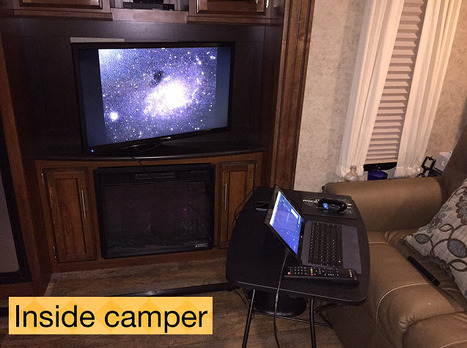
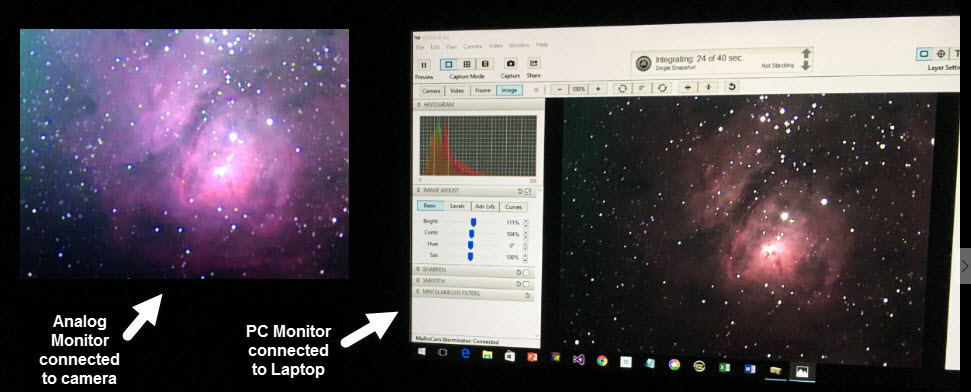
I was very fortunate to be camping next to Michael Carnes who was also using his upgraded XT828 on a MallinCam 8” Telescope operating with about the same field of view as my setup.  It was great being able to compare results and learn from each other.  We were both using MiloSlick software on our laptops in the MallinCam XTerminator mode for real time image processing/viewing and controlling the camera settings. Michael also had a video monitor set up next to his laptop so he could see a direct video feed from the XT828.  I had not used my video monitor in a while, so I decided to set mine up next to my computer screen as well.  I am so glad I did! 
Picture
There is something about viewing the subtle details in the unprocessed image on an analog monitor that draws you into the object you are seeing. Yes, the laptop enables you to use real time processing techniques, dark frame subtraction, frame stacking, etc. that enhances the image in its own way, and provides a means of saving the image on your computer.  But there is a Wow factor that is present in seeing the analog video image on a monitor. After slewing to a target and setting the exposure, I adjust the analog monitor brightness until the background is black, then increase the contrast to bring out more detail, and make one more adjustment to reduce the brightness a little to have a really nice image on its screen.  Then I work with the Miloslick software adjusting the histogram, etc to get the best image on the computer screen and save it. 
​

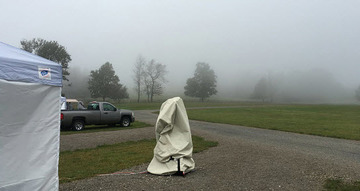
Unlike last year, we had several rainy and cloudy days and nights this year and our telescopes stayed covered. 
Picture
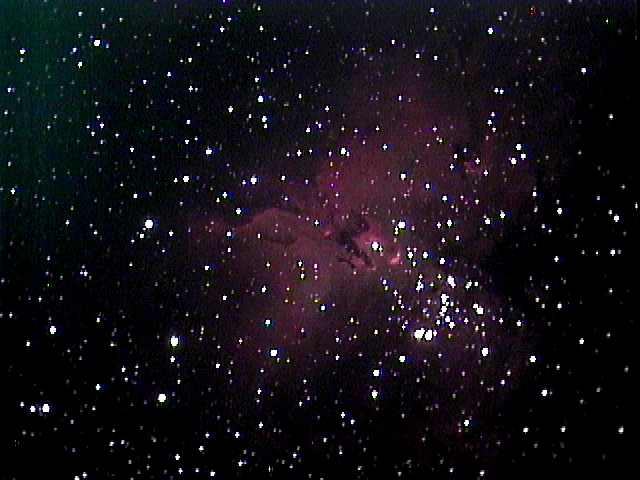
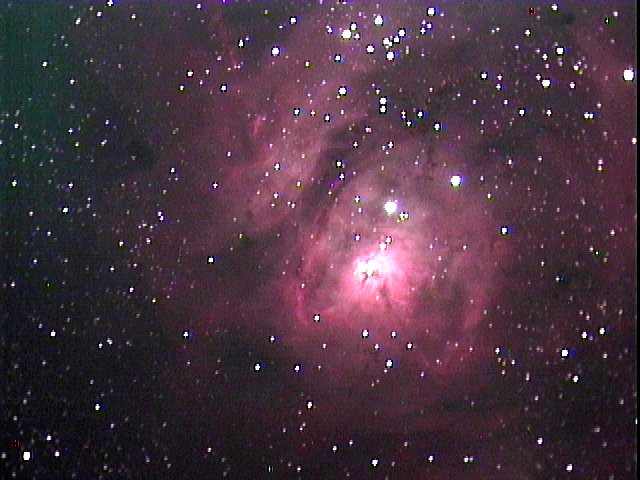
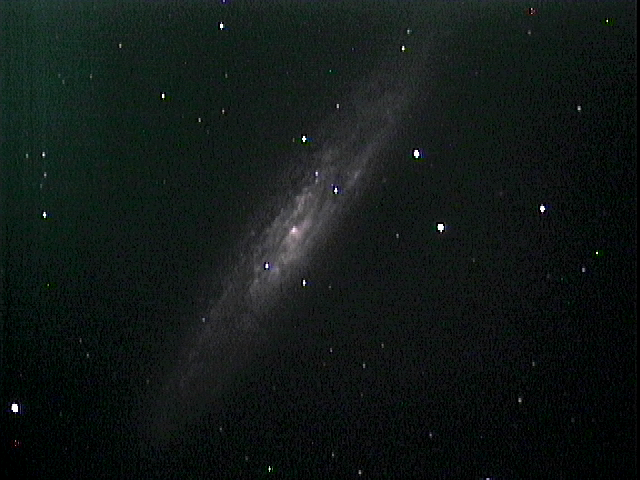
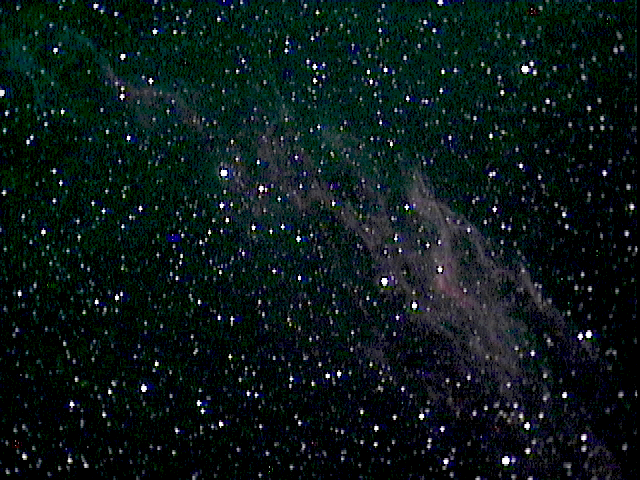
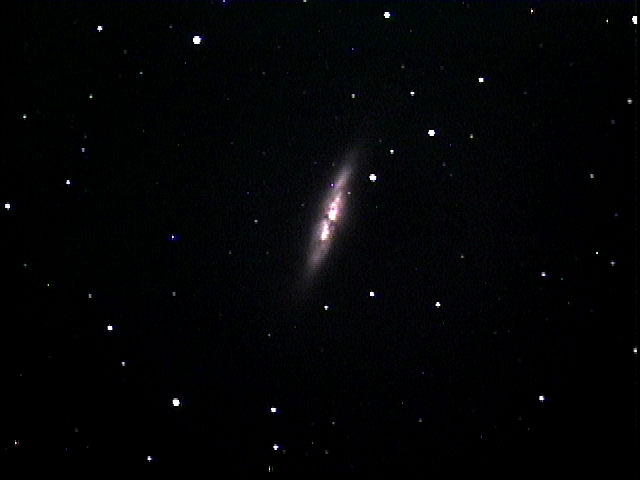
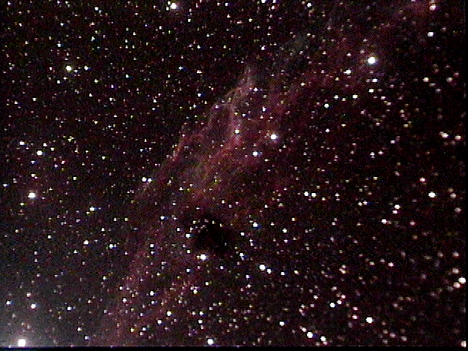
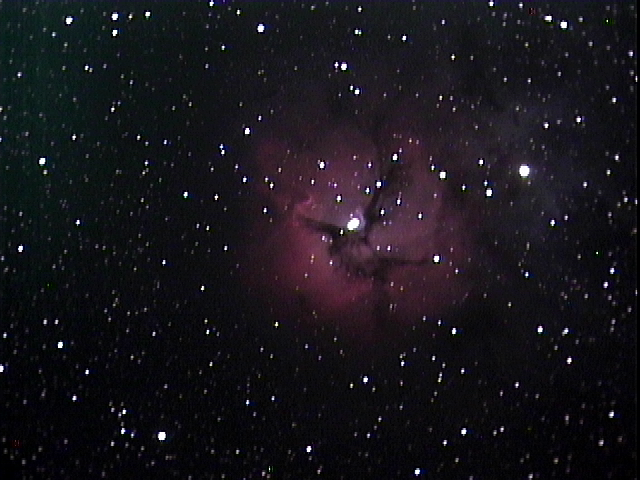
However, the last night I was there it was very clear and dark, which made it all worthwhile! The XT828 is so sensitive, I left the gain set to zero (off) the whole time.  The following pictures are untouched, live screen captures from my last night with hyper mode set at 30-40 second update intervals and no image stacking.
​
Picture
M20 Trifid

Picture
M16 Eagle
​

Picture
M8 Lagoon
​

Picture
NGC253 Sculptor
​

Picture
NGC6992 East Veil
​

Picture
M82 Bode
​

But all good things must come to an end, and we headed homeward the next day.
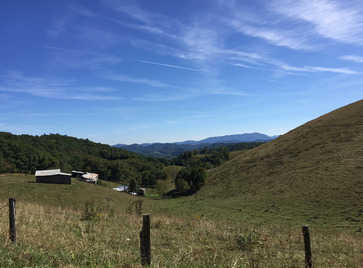
​
1 Comment

The 2015 East Coast Video Astronomy Rendezvous (ECVAR)

9/30/2015

5 Comments

 
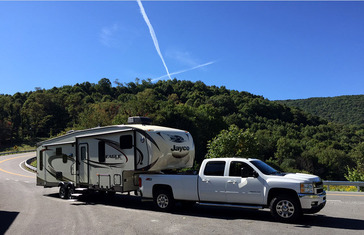
Having packed up two of my telescopes, my wife and I embarked on a two day drive pulling our camper to Cool Breeze campground in Virginia.  The end of the second leg of the drive took us a little longer than expected...our GPS took us the "scenic route" over a mountain.  Great scenery, but late arrival! 

Picture
Picture
We arrived at the campground for ECVAR late Tuesday afternoon, and we proceeded to settle in for a week of video astronomy!

Picture
Tuesday night

Later as it got dark, we stepped outside, looked up and were amazed at what we saw.  The Milky Way was painted from one end of the sky to the other!  I was able to set up my portable mount (after midnight) and try out my Remote Focus Mask and Dark Mask using the following equipment:

  • SkyProdigy Mount with AutoAlign built in
  • Celestron 5" telescope
  • MallinCam Micro-Super
  • MallinCam MFR-5 with 5mm spacer
  • JMI Motofocus with PCFC for remote focusing
  • Remote Focus Mask (prototype)
  • Powered Hub at scope with single USB cable to MS Surface Pro 2
  • MiloSlick for video, MMEC for controlling the Super and Starry Night to control the mount


I turned on the mount and started an AutoAlign while getting my laptop powered up.  I then slewed to Vega, entered the command to close the Focus Mask over the end of the dew shield, and clicked on the focus setting on my MMEC app.  Then I remotely adjusted the focus until the mid-line was between the X of the other two diffraction patterns.
Picture
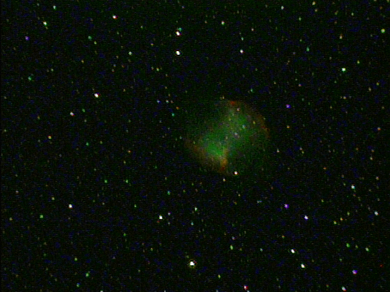
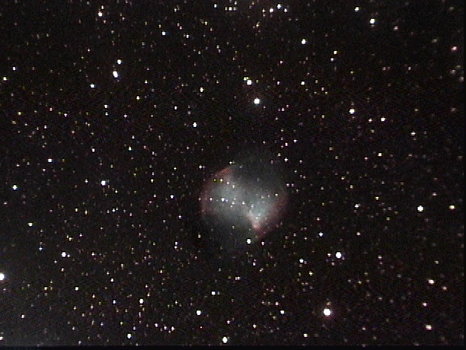
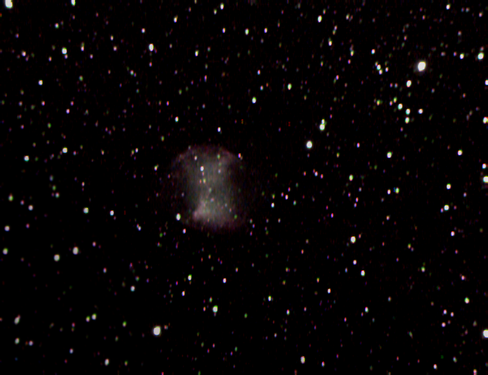
Next I entered the command to open the Focus mask for normal viewing. I slewed to M27 and clicked on an MMEC preset useful for centering faint objects, and then used the Starry Night manual mount controls to get M27 centered.  I clicked on the MMEC DSO preset (which uses x1024) and waited for the screen update.  Here is the image of the Dumbbell Nebula that I saw using my 5" telescope and MC Micro-Super entry level video astronomy camera.

Picture
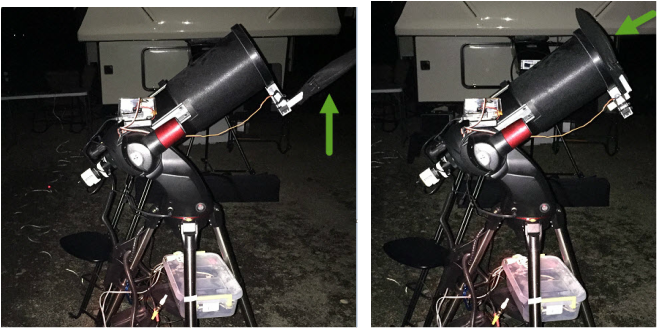
Then a thought occurred to me ... whether it might be useful to have a dark frame image at x1024 for the Super.  So I got my felt pouch and put it over the focus mask, entered the command to close the Mask over the end of the dew shield, and waited for the image to appear.  Here are pics of the Remote Dark Mask open and closed over the end of the dew shield.

Picture
Now with no light entering the telescope, the next image I saw was dark.  I mean really dark.  The Micro Super has virtually no amp glow!  And to my surprise I did not see any hot pixels either (camera pixels that are stuck on and look like small stars)!  It was about 50 degrees outside at this time.  I even used the MiloSlick software to scan the image for hot pixels and it did not find any.   This just reinforced my opinion that the MallinCam Micro is a great entry level video astronomy camera, especially the Micro-Super!

I also felt good about how the Remote Focus Mask and Remote Dark Mask concept actually worked in the field.  But by this time it was way past my bedtime and I had to defer its further testing to another night. 


Thursday and Friday nights


Unfortunately Wednesday night at ECVAR had some clouds, but Thursday and Friday evenings were great and made up for it.  On Thursday I had my main telescope set up with the following equipment:

  • Celestron CG-5 Equatorial Mount
  • Celestron 8” Telescope
  • JMI Motofocus with PCFC for remote focusing
  • NexGen MAXfield 0.33X Telecompressor
  • MallinCam X2 Deluxe with Class 0 sensor
  • StarSense AutoAlign accessory
  • Celestron GPS accessory
  • MallinCam Micro-EX on Orion 50mm finder scope
  • Powered Hub at scope with single USB cable to MS Surface Pro 2
  • MiloSlick for video and X2 control, MMEC for Micro Control and Starry Night to control the mount
 

The NexGen Focal reducer essentially converts my C8 F10 telescope to F3.3.  The single USB cable from the powered hub at the telescope enables me to operate underneath a nearby canopy, or using an active USB extension cable I can move inside for warmer viewing.

Picture
Picture


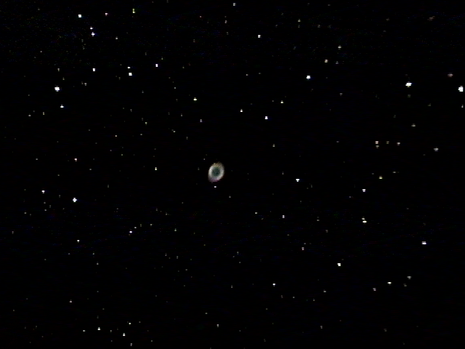
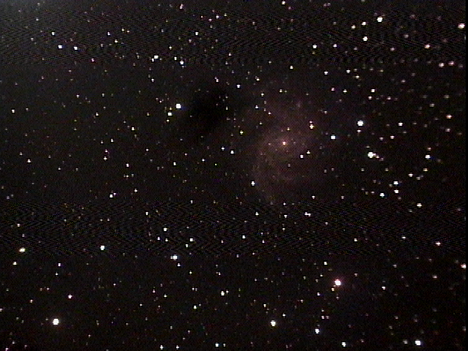
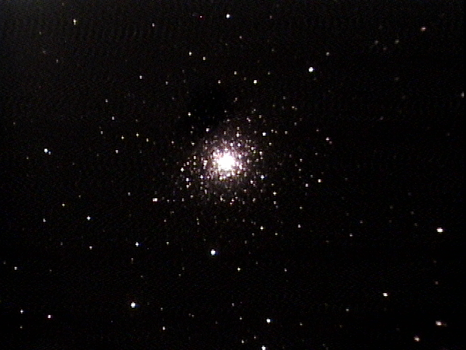
Here are some of the screen grabs of the near real time images I saw on my screen. Keep in mind these are "live" views at 10-20 second update intervals with no stacking or post processing.


Picture
M27 Dumbbell Planetary Nebula


Picture
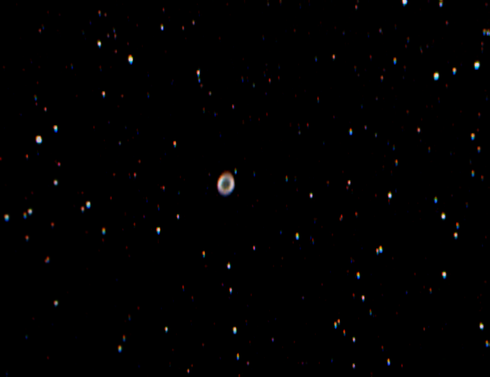
M57 Ring Nebula


Picture
NGC6946 Fireworks Galaxy


Picture
M92 Globular Cluster in Hercules


Picture
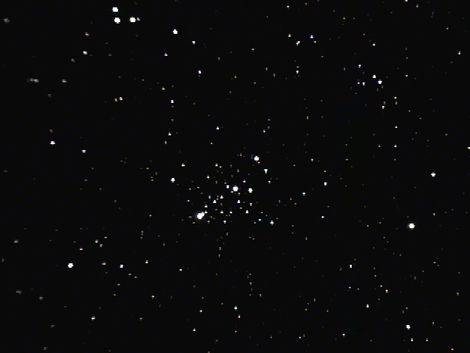
M103  (Can you see the "Micro dipper")


Picture
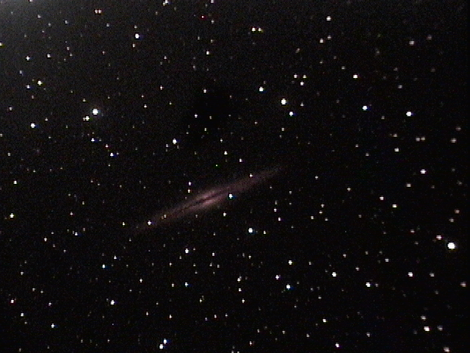
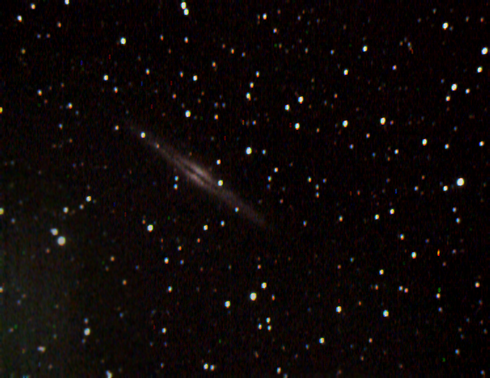
NGC891 Edge-on Spiral Galaxy


Picture
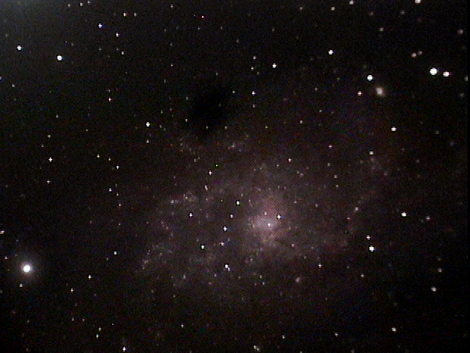
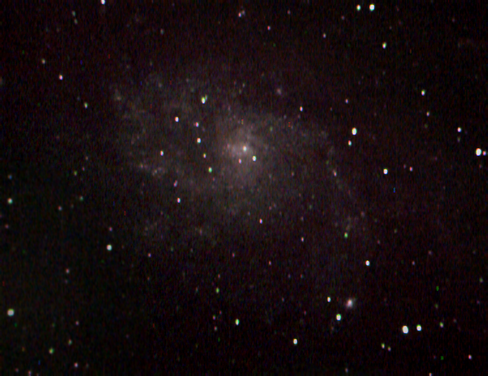
M33 Pinwheel Galaxy


Picture
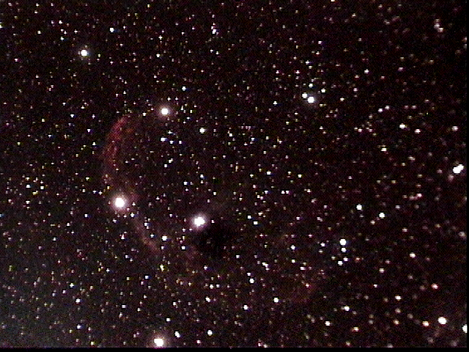
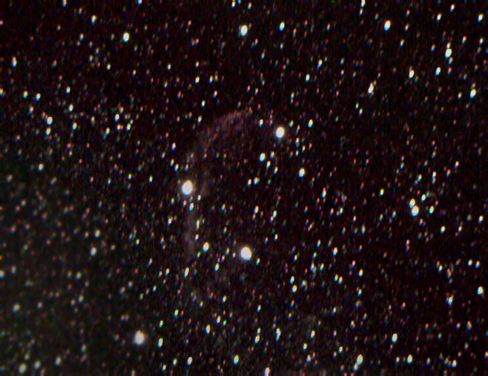
NGC 6888 Crescent Nebula


Picture
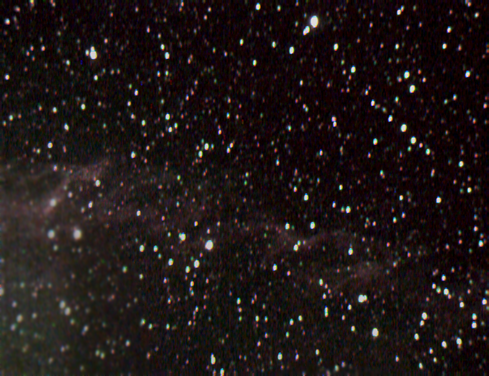
NGC6992 Veil nebula


Thursday and Friday nights at ECVAR were the best skies I have ever been under for Video Astronomy!

More on Friday night
Later Friday night  I also tried out the SkyRaider DSc with a MFR-3 focal reducer and 5mm spacer on my Celestron 5" with my SkyProdigy Alt-Az mount.

After using my Remote Focus Mask to achieve a good focus, I placed the black felt pouch over the mask to convert it to a Remote Dark Mask.  I typed my close command on my laptop to move the Remote Dark Mask over the end of the dew shield, and captured three (quality=3) 60 second dark exposures as suggested by Chris A (even though my planned viewing exposures were 15-20 seconds).  Chris has found that these initial set of dark exposures typically are good for the evening, unless the temperature changes drastically over 5 degrees or you go over 2 hours of viewing.  If new darks are needed later, I can just type the command to close the Remote Dark Mask and take a new set.  I left the histogram and other settings at their default values for the dark capture process.

I then typed the open command on my laptop to remove the Remote Dark Mask from the end of the dew shield for normal viewing. I enabled the Dark Field Correction for viewing all images and adjusted the real time histogram as needed for each target.

Here are some image grabs (no stacking or post processing) using the MC DSc on my smaller 5” Celestron.

Picture
M27 Dumbbell


Picture
M57 Ring Nebula


Picture
NGC 891 Galaxy


Picture
M33 Pinwheel


Picture
NGC 6992 Veil


Picture
NGC6888 Crescent


All in all, it was a great week for my first time at ECVAR.  I enjoyed getting to know my fellow video astronomers better, seeing their setups and learning from them.  I’ll definitely be back next year!

5 Comments
Forward>>

    Author

    Astronomy was my favorite hobby many years ago, but was gradually set aside due to work, family and life in general.  In recent years I resumed my hobby looking forward to using the new technology that is now available.  Then I discovered Video Astronomy.  Then I learned how to do it Remotely.  I wrote some books, and decided to set up this web site to continue to pass on what I learn.

    ​Jim Meadows

    Questions or comments?  Email me at:
    ​[email protected]

    NOTE: If you use Microsoft Edge and clicking on an Archives or Categories link below does not work, please try an alternate browser (e.g. Chrome).

    Archives

    March 2026
    November 2025
    September 2025
    August 2025
    February 2025
    December 2024
    August 2024
    April 2024
    February 2024
    October 2023
    June 2023
    September 2022
    May 2022
    May 2021
    December 2020
    October 2020
    May 2020
    March 2020
    February 2020
    July 2019
    June 2019
    May 2019
    January 2019
    December 2018
    November 2018
    October 2018
    April 2018
    March 2018
    November 2017
    October 2017
    September 2017
    August 2017
    June 2017
    April 2017
    March 2017
    January 2017
    December 2016
    October 2016
    August 2016
    July 2016
    May 2016
    April 2016
    March 2016
    February 2016
    January 2016
    December 2015
    September 2015
    August 2015
    June 2015
    April 2015
    March 2015
    January 2015
    December 2014
    November 2014

    Categories

    All
    Accessories
    AGc / AGm
    Articles By Others
    Astrophotography
    Auto Align
    Auto Center
    Auto-center
    Build
    Commentary
    DS10c
    DS2.3+
    DS26cTEC
    DS8300cTEC
    Eclipse
    Focal Reduction
    Hyperstar
    LHDR
    LPP
    Mallincam Micro
    MallinCam Netbook Kit
    MallinCamSky
    MallinCam X2 / XT
    MallinCam Xterminator
    Miloslick
    Mmec Software
    Permanent
    Pier
    Portable
    Pro Dob 2
    RASA
    RVA
    SharpCap
    SkyBT
    SkyFi
    SkySafari
    SkyShed
    Software
    Solar Viewing
    Star Parties
    StarSense AutoGuider
    Starter Telescope
    Stellarium
    Video Astronomy

    RSS Feed

Web Hosting by Domain.com