Remote Video Astronomy
Practical solutions to questions when using video assisted Astronomy remotely
  • Home
  • RVA
  • Start Simple
  • Learn More
  • Expand
  • Downloads
  • Blog

Cool Breeze 2022 mini-star party in honor of Michael Carnes

9/25/2022

0 Comments

 
Michael Carnes was a good friend and fellow observer of the night sky using video astronomy equipment.  Michael passed away earlier this year as a result of a very unexpected heart attack. Michael and DiAnne had moved to one of the park homes at Cool Breeze Campground in Galax, Virginia in April 2021.  Cool Breeze had become a great dark sky location for small star parties that my wife and I attended.   Michael built a great observing deck and place for his astronomy equipment after they moved there. It was fitting that, with DiAnne’s encouragement, we had another mini-star party in Michael’s honor on his deck. Some of the deep sky images I captured there are part of this post.

I learned that Michael had a PhD in Plant Sciences and, as part of his career, he was hired by Monsanto Company in St. Louis, MO, to head up a research lab. He developed techniques that led to significant scientific breakthroughs to help make crops more productive and resistant to disease and weather.  He travelled often to Switzerland and Japan for research collaboration. Michael also founded a company to provide greenhouse technology to poultry farmers.

After retiring, Michael became extremely interested in the advances in Video Astronomy that enabled someone to see on a screen during an observing session what we never would see just looking through a telescope. He met other amateur astronomers as DiAnne and he travelled in their small RV to night sky sites. This is how Sharon and I met them since we were doing the same thing.

I have included in a prior 9/1/2022 post a great article that Michael wrote for those who might be considering Video Astronomy.  In the article he discusses suitable telescopes, mount characteristics, Video Camera considerations and software. 

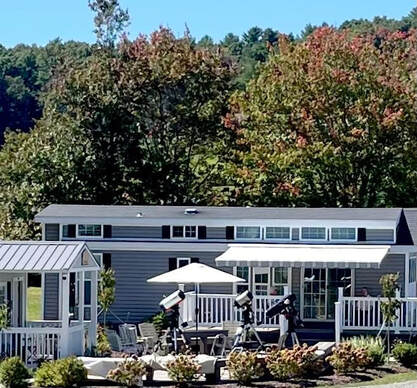
I brought my 8” RASA telescope and DS26cTEC camera to use on my Celestron AVX mount with StarSense AutoAlign while at this special star party on Michael’s deck. Below is a picture that shows his storage shed for his equipment on the left and the open deck on the right.  
Picture
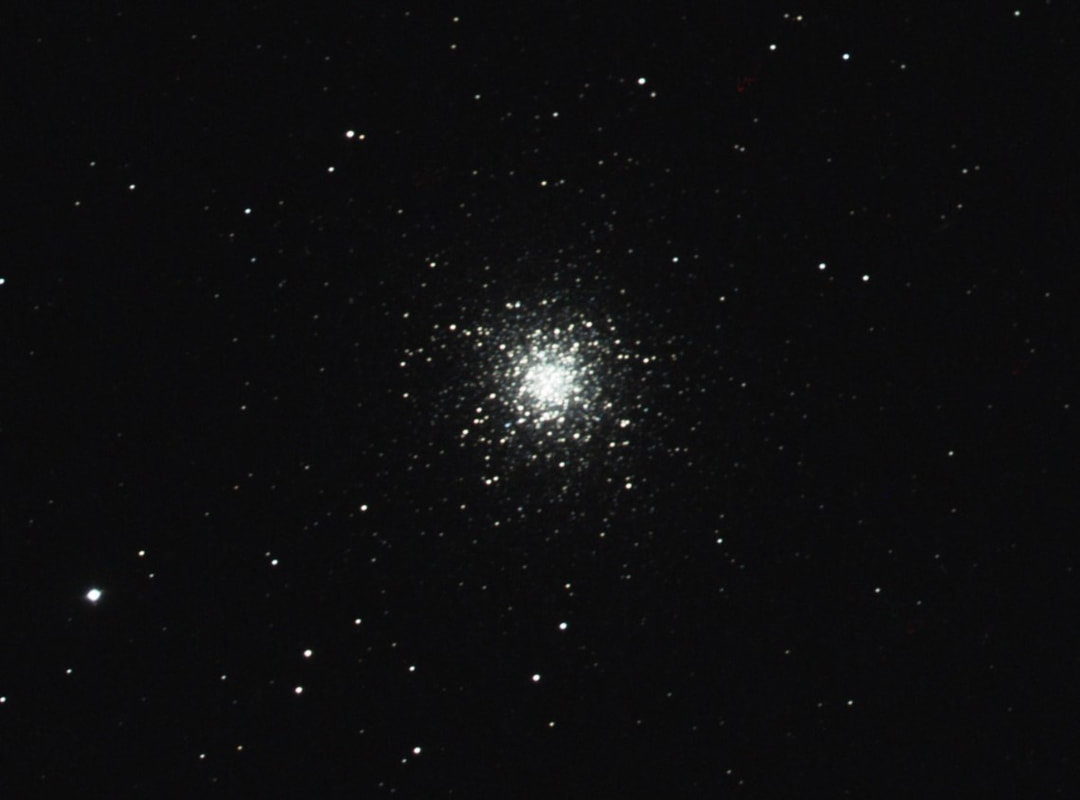
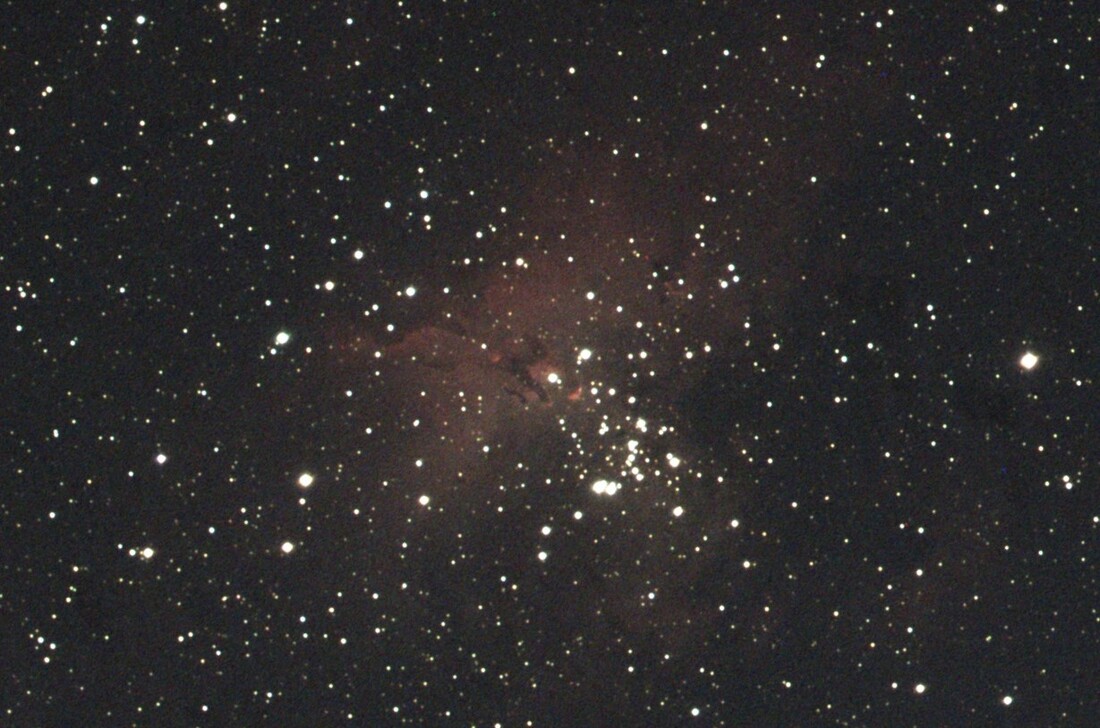
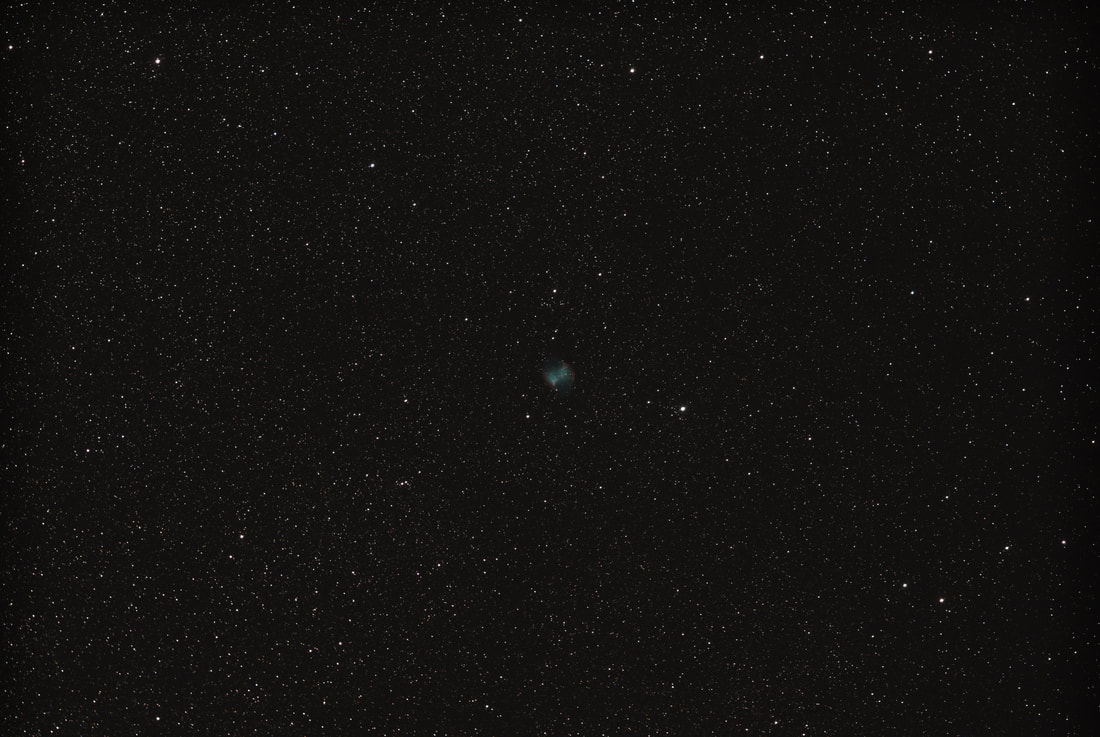
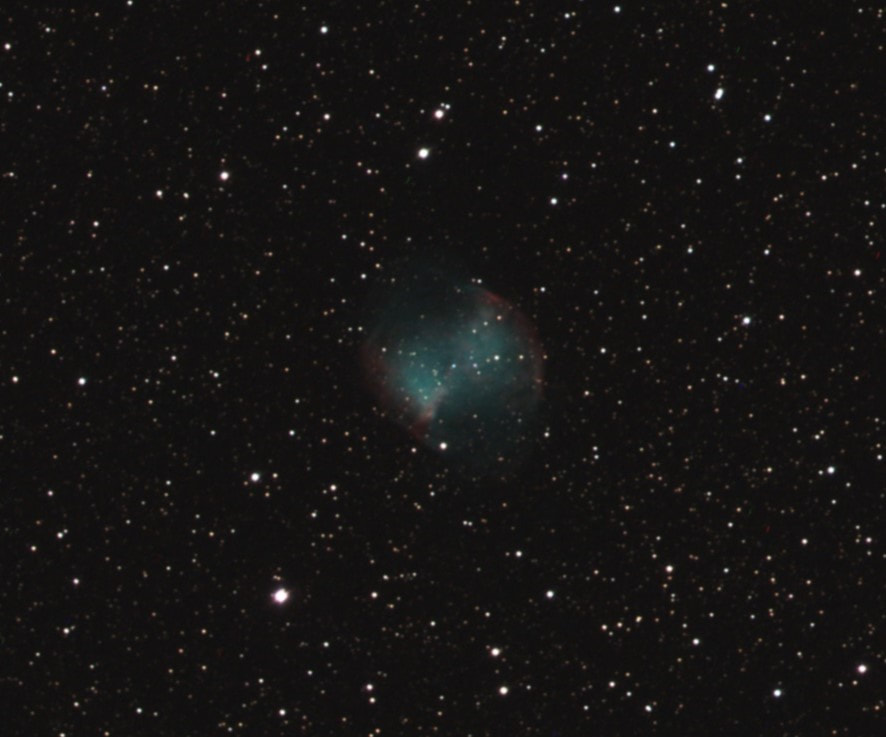
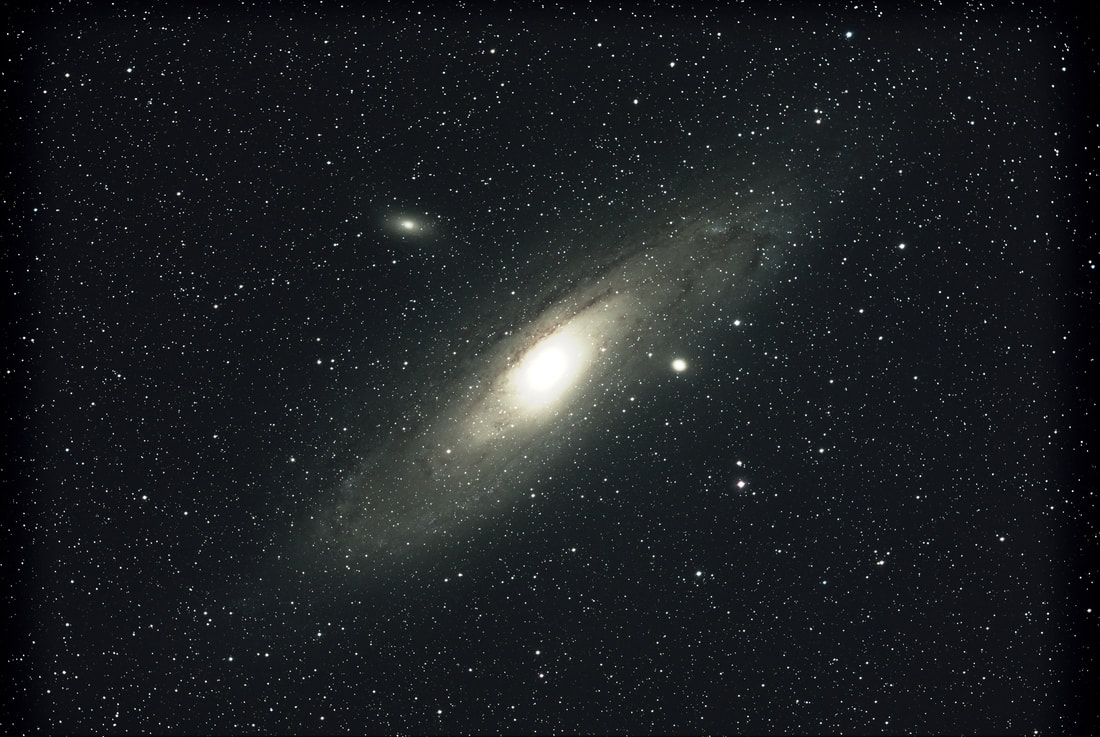
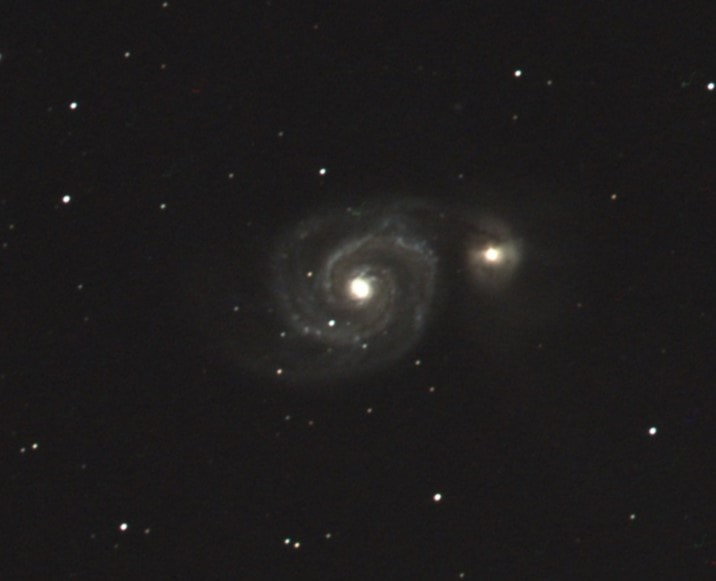
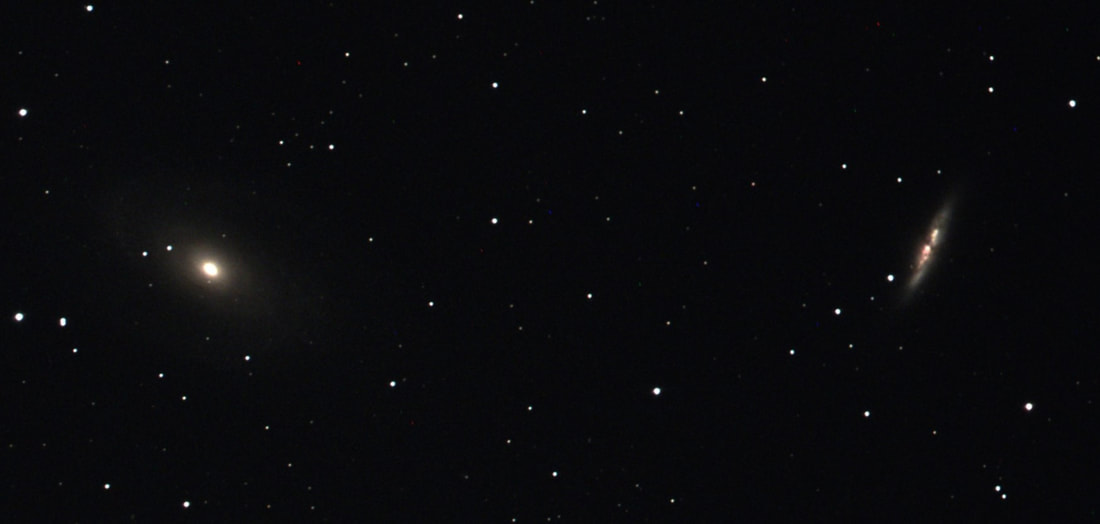
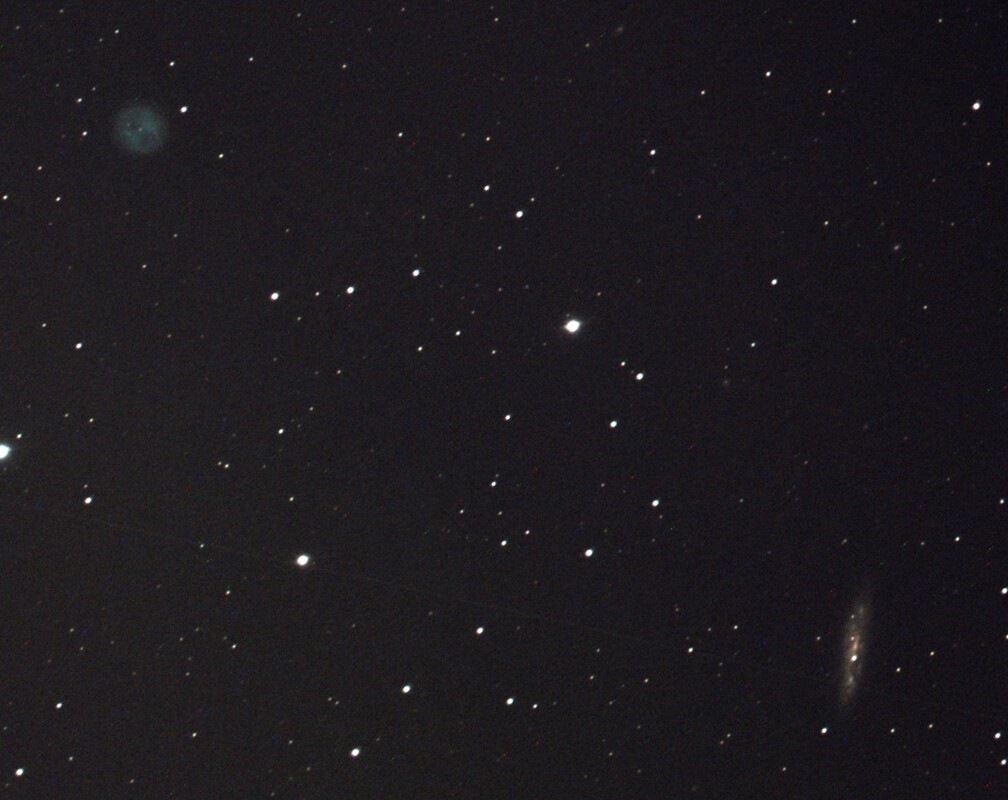
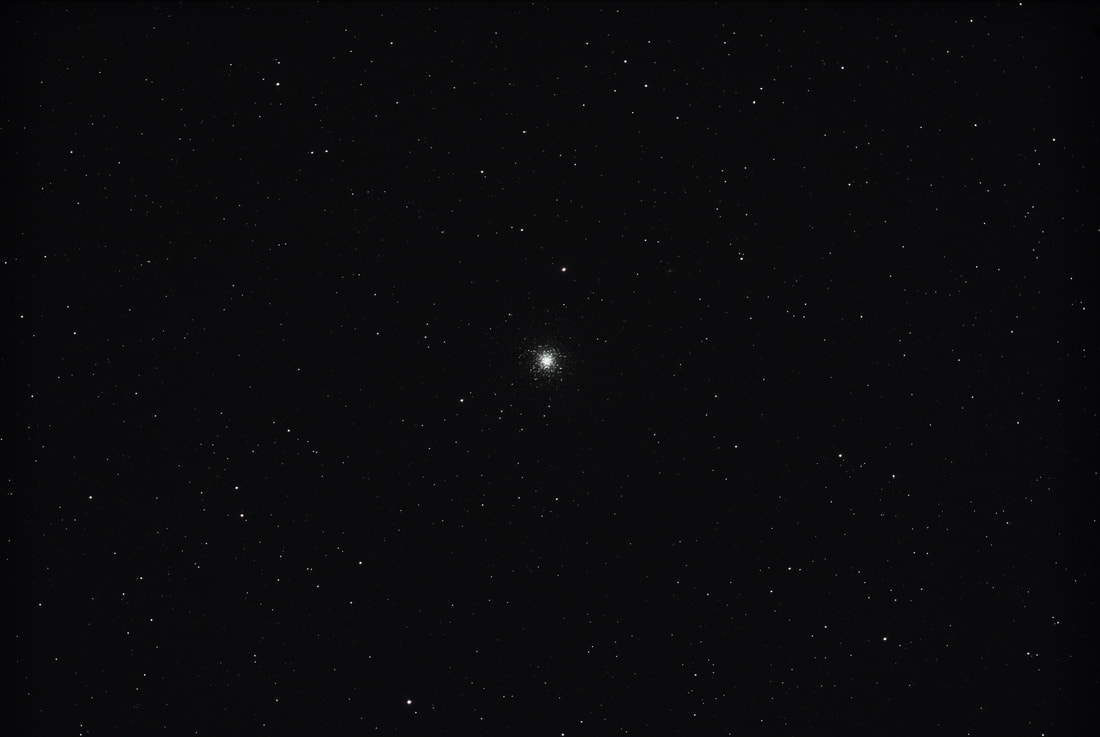
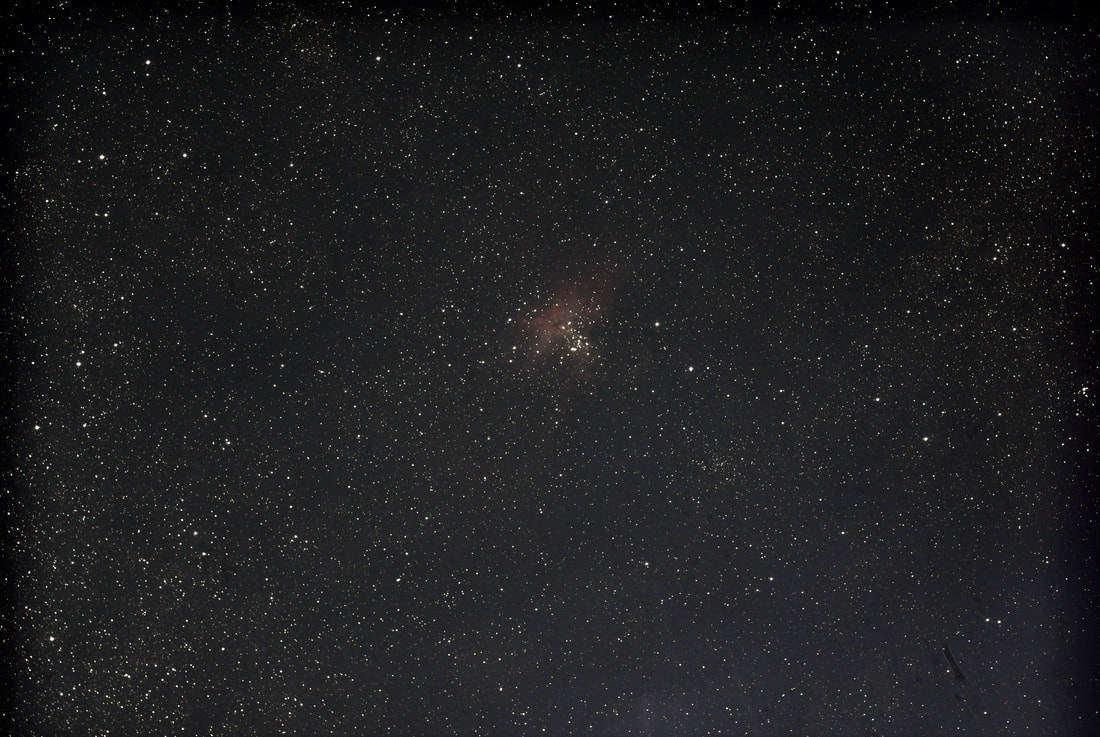
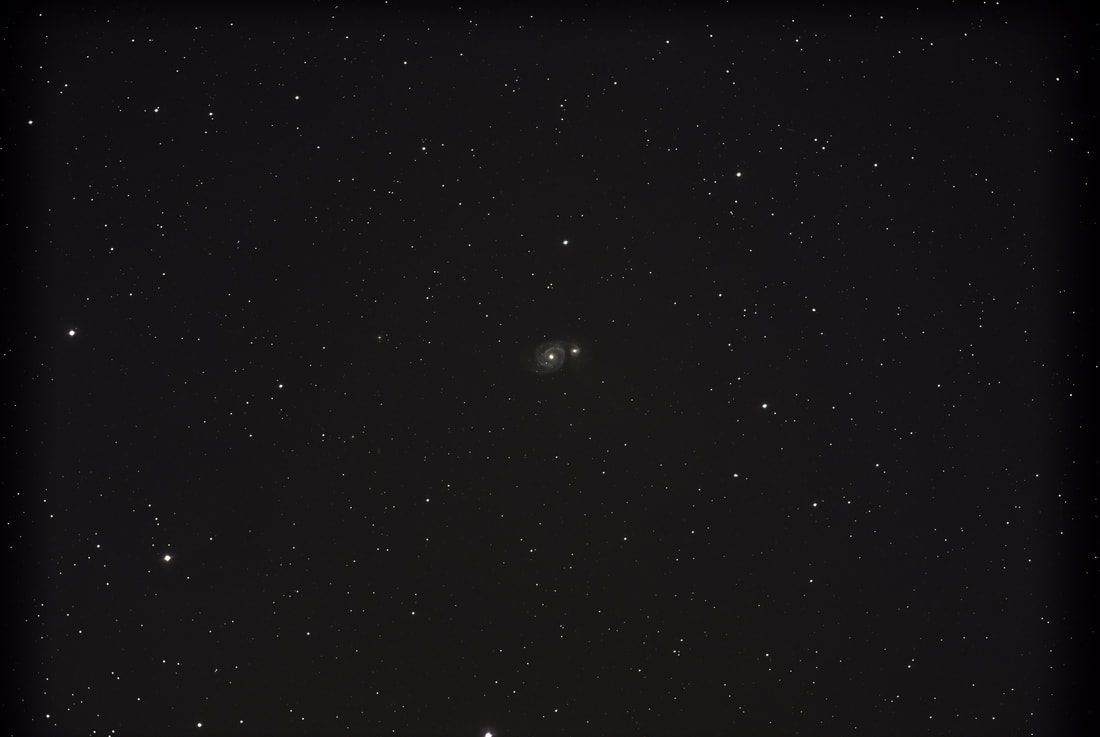
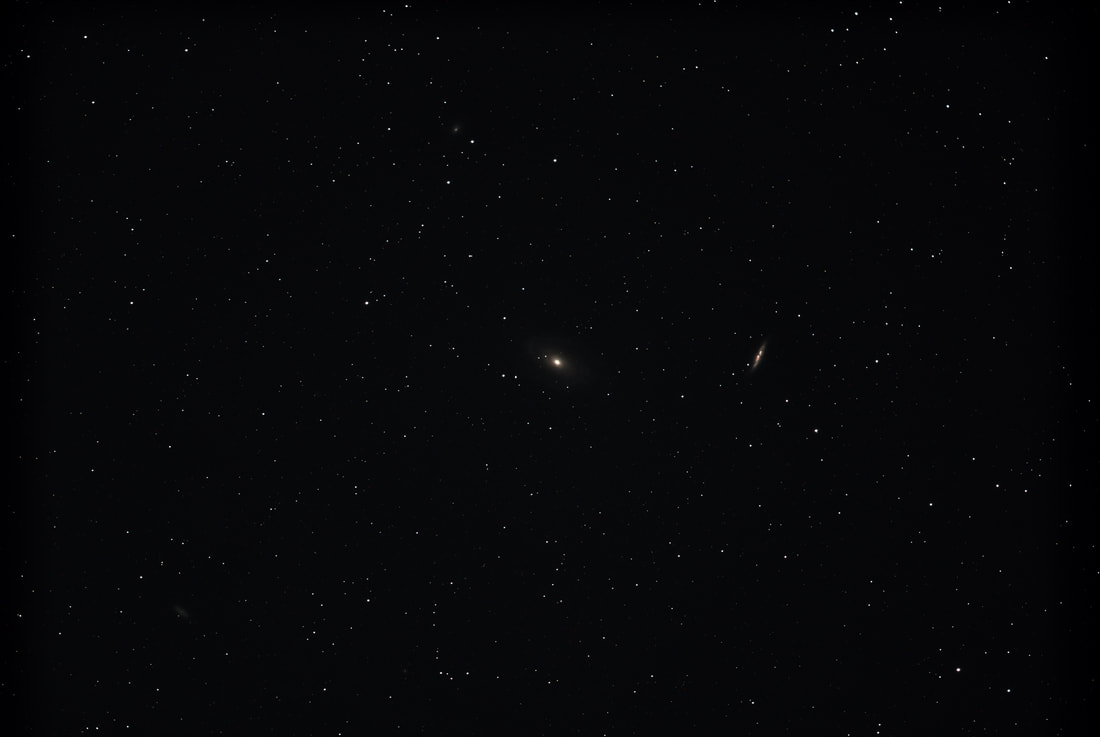
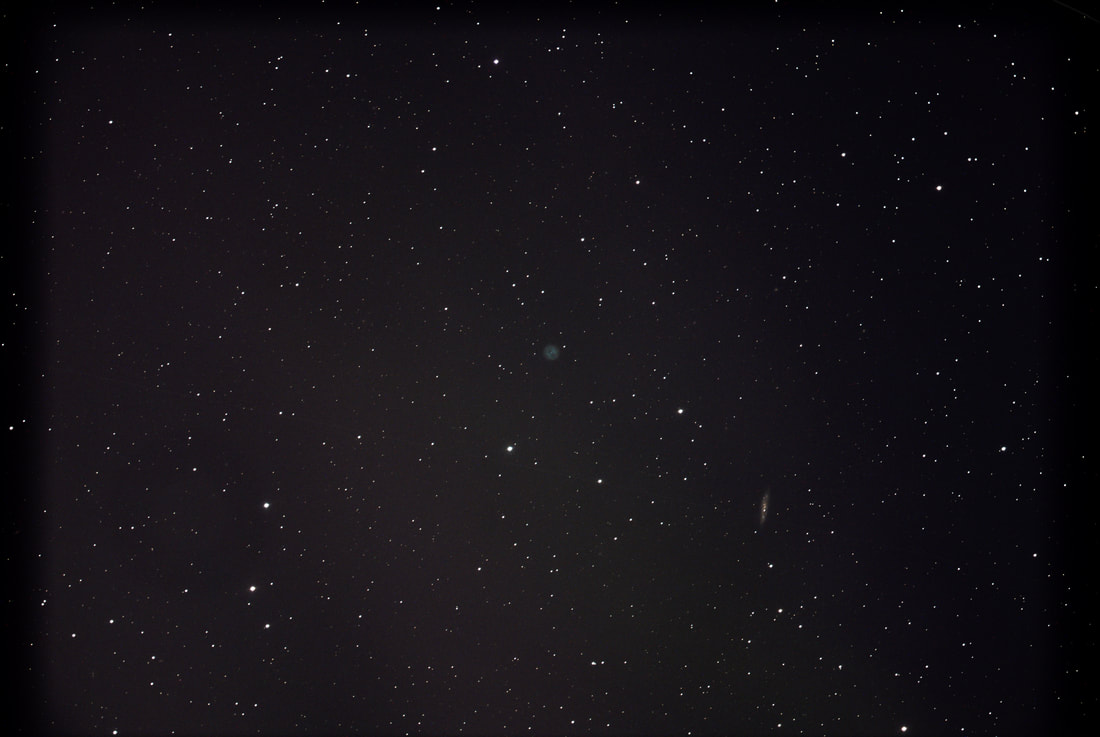
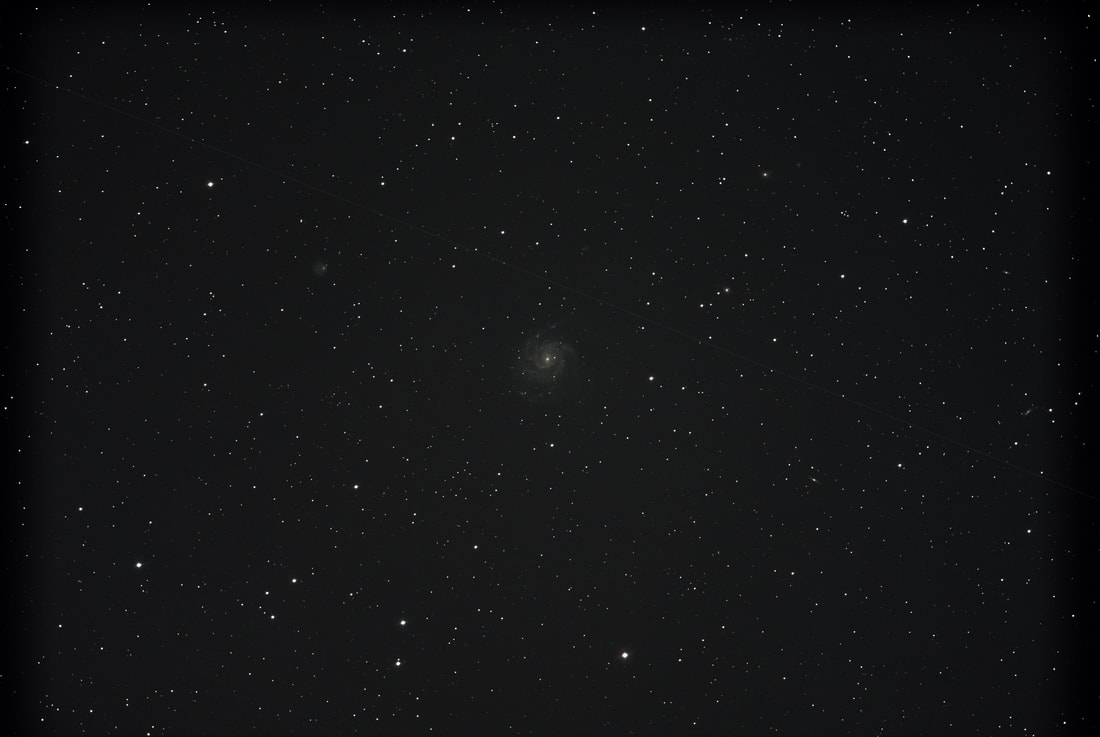
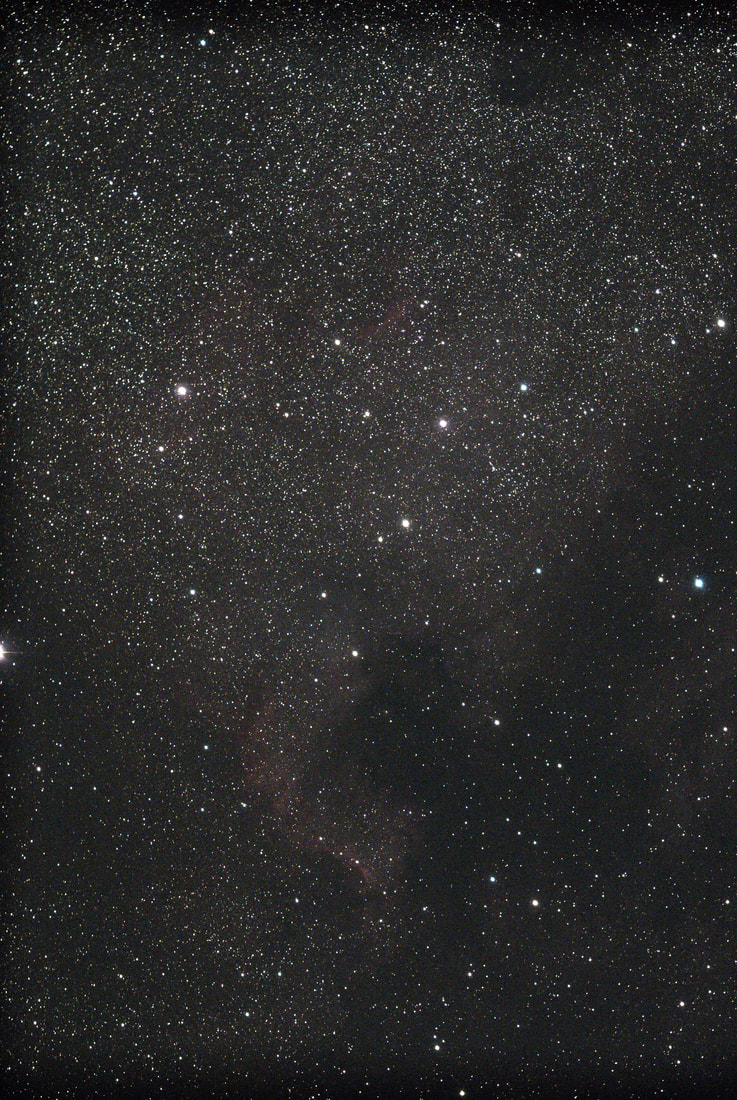
You can see three telescopes set up on the deck (my RASA is on the left).  This was the first time I used my RASA away from home.  I really like going to Cool Breeze because it has Bortle 4 dark skies, low temps and low humidity. Below are several images I captured while viewing on Michael’s deck at night.  As I have done in the past for smaller deep sky objects, I include both the full FOV image and a zoomed (cropped) image.  These are the actual images I captured with no post processing or enhancements. The key exposure information is listed below most images.
Picture
Picture
Hercules Cluster     m13 – 1b 1s 100g 0-255..150..100h-lhdr 35stk      5.78 magnitude 23 Kly
Picture
Picture
Eagle Nebula     m16 100g 2s 50-150h
Picture
Picture
Dumbbell Nebula    m27 100g 2s 20-150h
Picture
Andromeda Galaxy    m31 100g 5s 30-150h 50stk
Picture
Picture
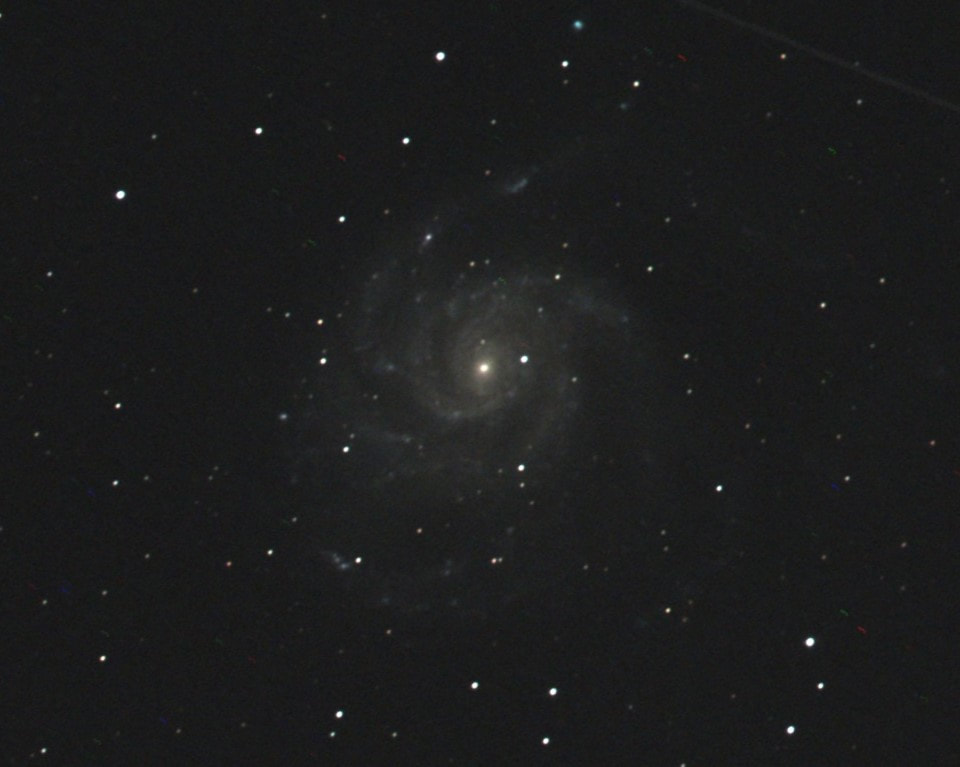
Whirlpool Galaxy    M51 - 1b 4s 100g 30-150h 50stk     7.92 magnitude 28 Mly
Picture
Picture
Bode’s Nebulae/Cigar Galaxy  M81/M82 - 1b 2s 100g 20-150h 20stk  6.77/8.02 magnitude 12 Mly
Picture
Picture
Owl Nebula/Spiral Galaxy    m97/m108 100g 5s 70-150h 30stk
Picture
Picture
Spiral Galaxy in Ursa Major    m101 100g 5s 15-150h 30stk
Picture
North American Nebula     NGC7000     4 magnitude 2.6 Kly
0 Comments

Considering Video Astronomy?

9/1/2022

0 Comments

 
​The following article was written by Michael Carnes for those who may be considering Video Astronomy. It is included here with permission by his wife DiAnne.
Your browser does not support viewing inline PDFs. Click here to view the PDF.
0 Comments

Portable Basic+ Remote Video Astronomy

3/6/2020

0 Comments

 
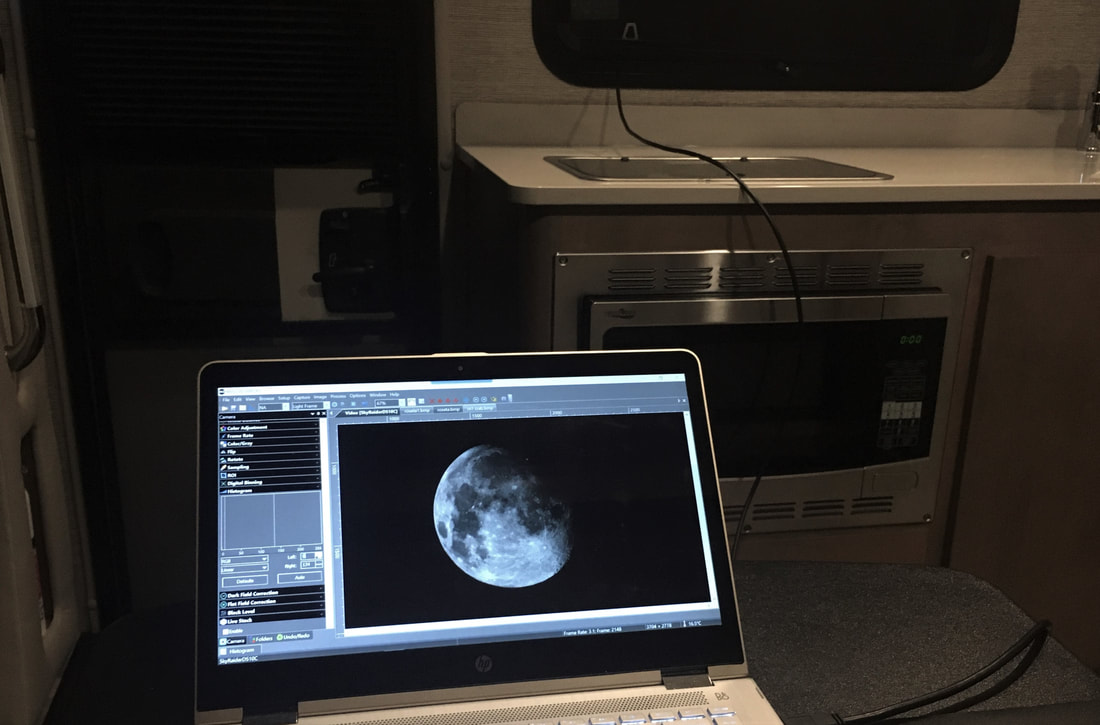
It was a cold night and the Moon was rising, but it was clear. We have had lots of rain and clouds recently and I have not had much viewing time this year.  So, I decided to take advantage of the evening and use a basic Remote Video Astronomy (RVA) setup … inside our motorhome where it was warm.  Through the use of a Video Astronomy camera and a simple means to extend the camera cable inside, along with a way to control the mount remotely, it doesn’t matter to you how cold it is outside since you are toasty warm inside.

It was not near as cold as shown in Matt’s outside setup in the prior 2/9/2020 blog post containing his article in the Cedar Amateur Astronomers newsletter. The only addition he needed to add for his Remote Video Astronomy setup was a USB3 extension cable attached to the cable of his Video Astronomy Camera and run it along with the mount hand controller cable through his convenient patio door. Be sure to read his article for some very good tips.
​
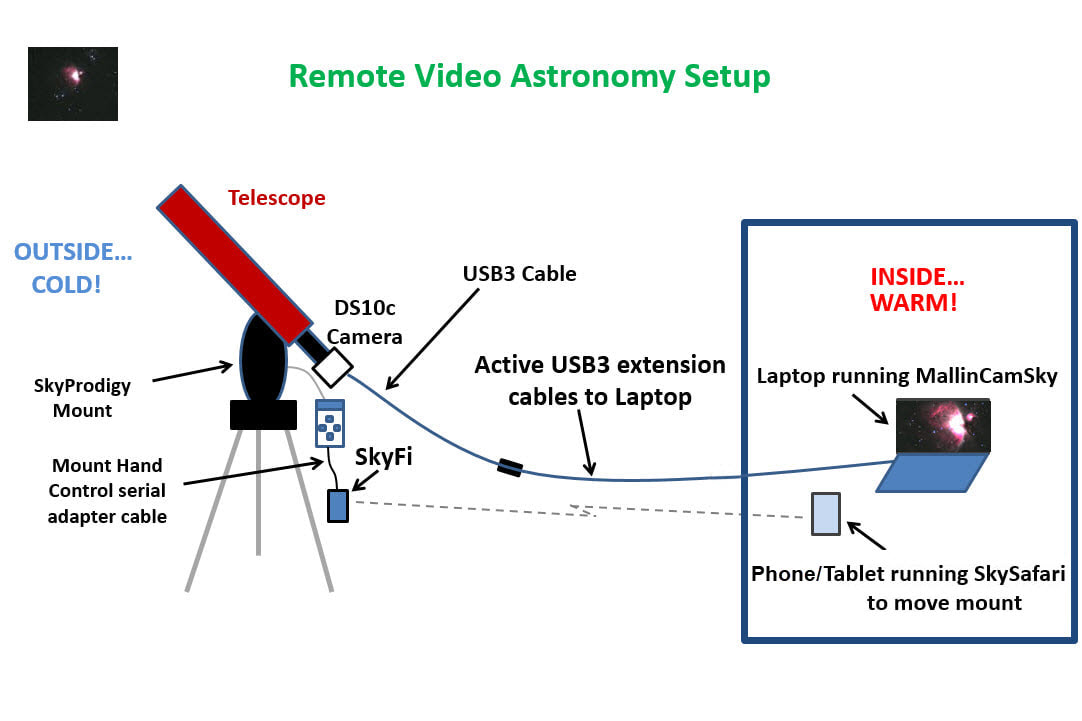
I also used a USB3 extension cable but added a SkyFi module at my telescope which allowed me to control the mount from inside wirelessly using SkySafari on my iPhone as shown in the following diagram.
Picture
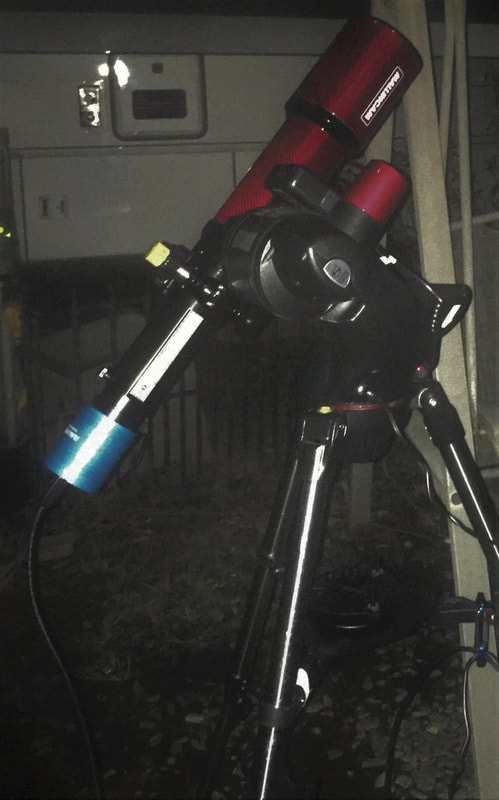
I used a Mallincam DS10c Video Astronomy camera inserted into an MCR-80 Refractor on a SkyProdigy mount (which has auto align built in).  This was very portable and was easy to set up near our Motorhome.

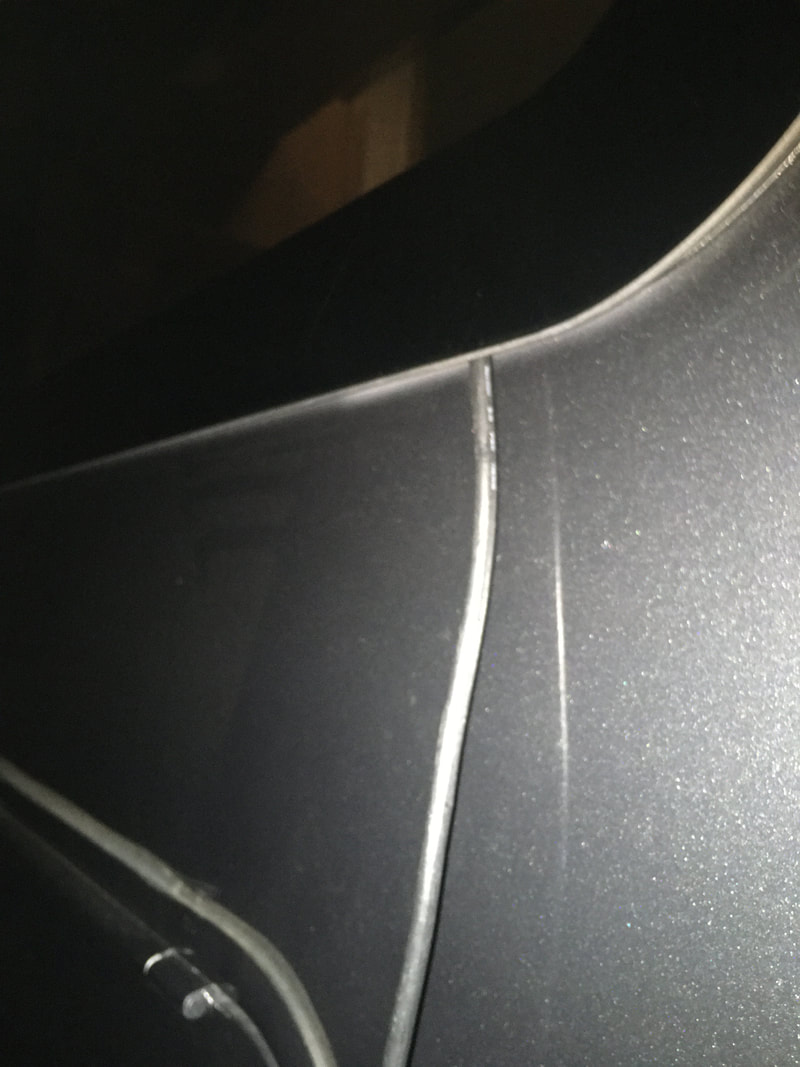
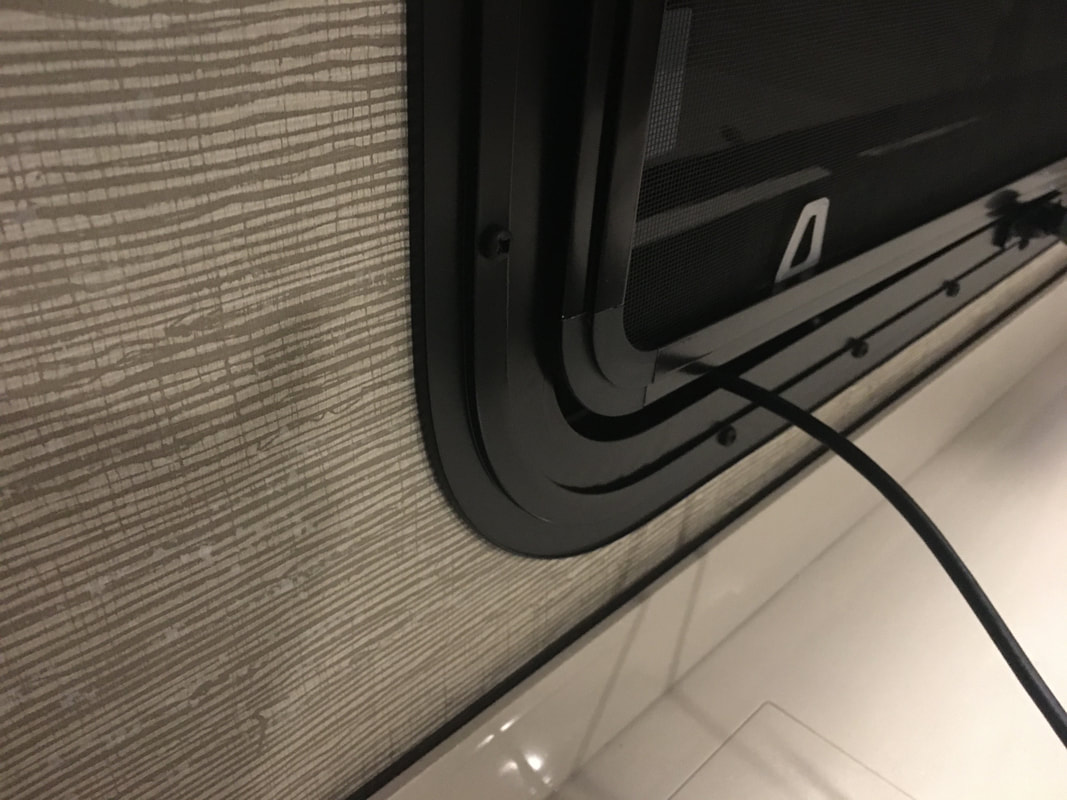
​Since I was controlling the mount wirelessly, the only cable run I had was the USB3 extension cable snaked through a window on the Motorhome. 

Picture
Picture
Picture
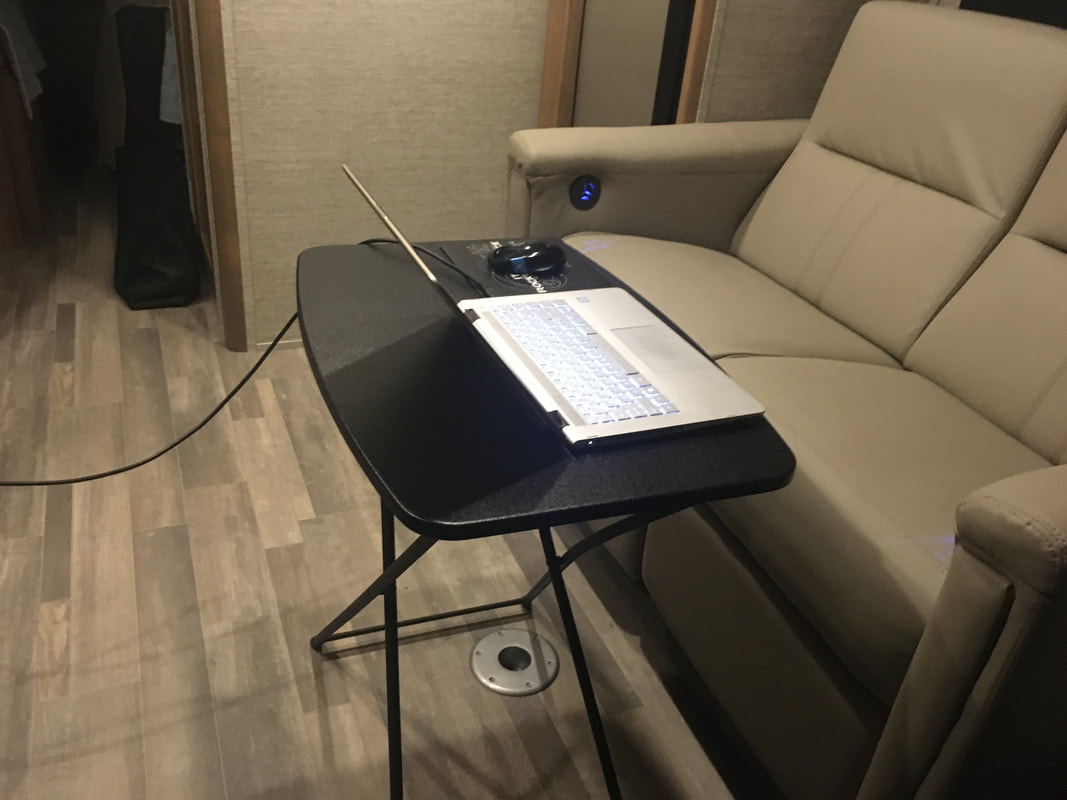
I was able to gently almost close the window to keep the cold out (a towel could be used to seal it better if needed) and operate using my laptop and phone from the couch inside the motorhome.
Picture
Picture
Before we changed over to a Motorhome, we pulled a camper and I had a small port installed on the side so I could easily pass through cables from my RVA equipment outside (see my 8/5/2015 blog post). With our newest rig, I decided to keep it simple and just run the USB extension cable through the slightly open window.


Portable

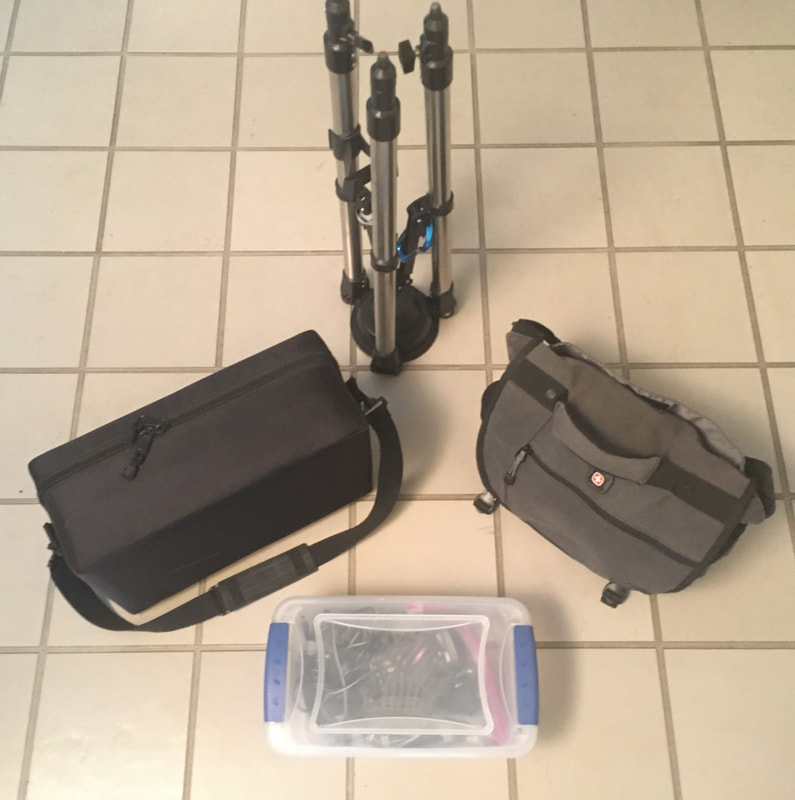
This is a basic+ RVA setup that is extremely portable and great to take with me on our travels.  The telescope and mount are lightweight and easily carried in cases.  The tripod and the cable bin could be put into a suitcase if you are flying to your destination (the mount could also be packed in a suitcase if needed).
Picture
Picture
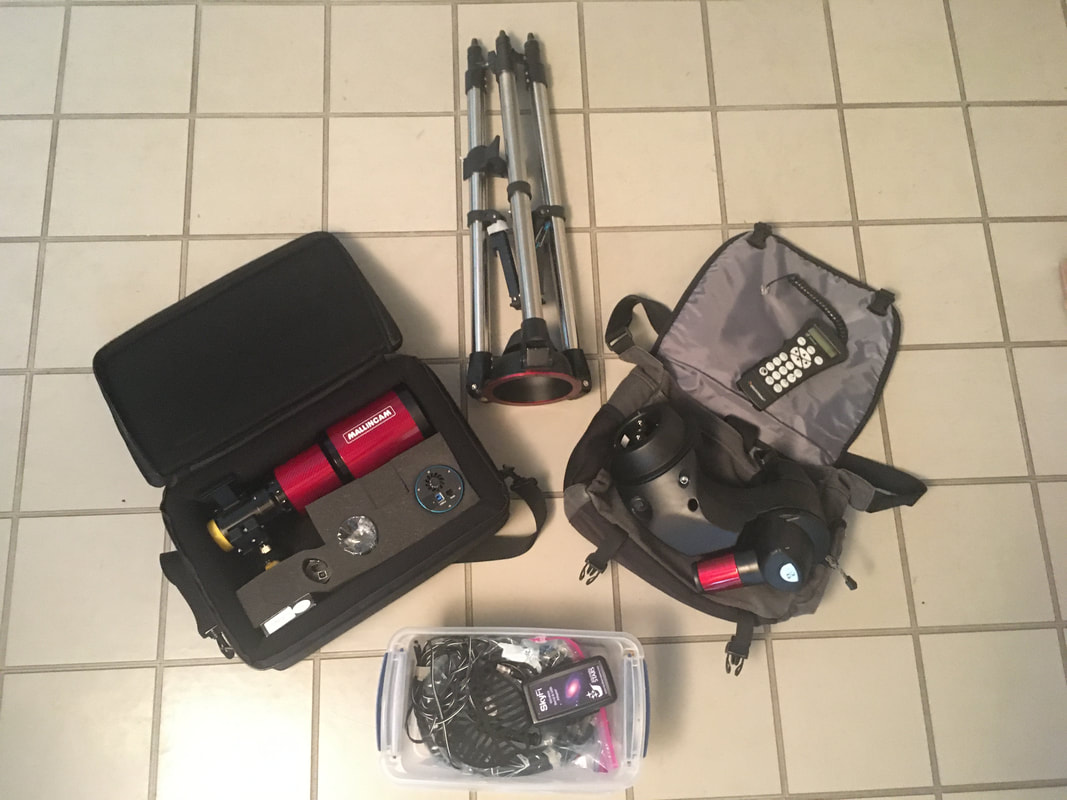
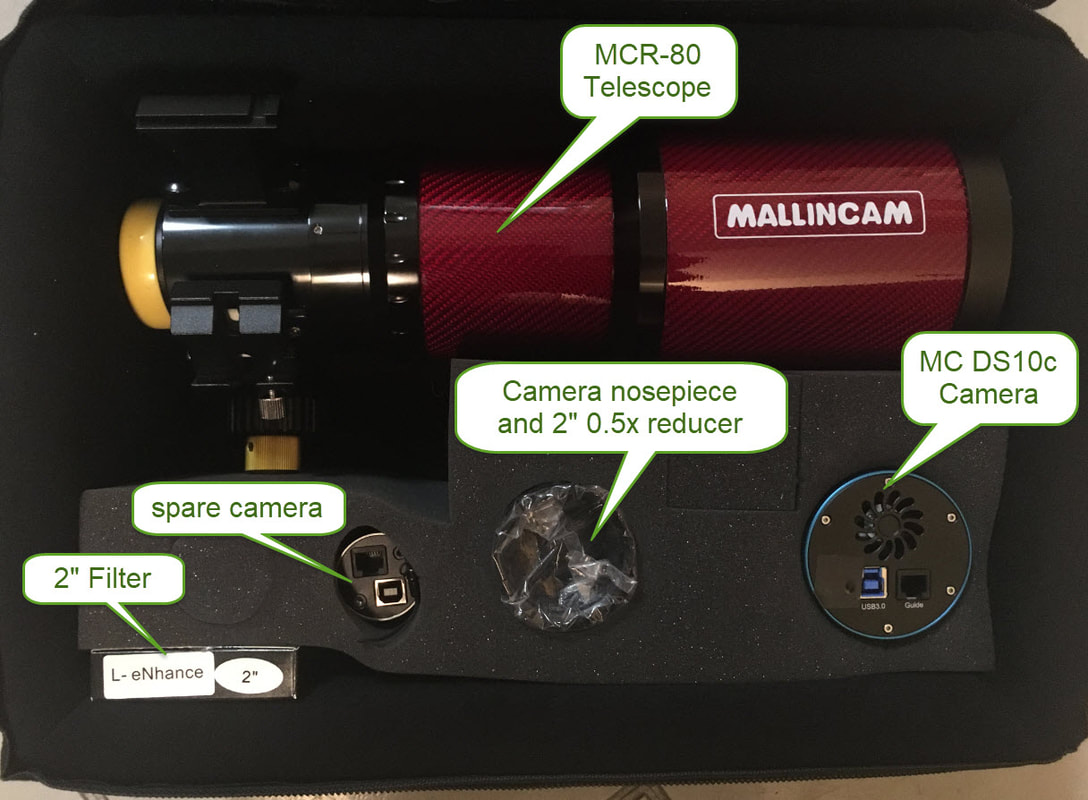
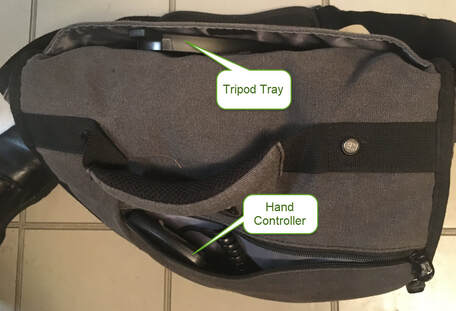
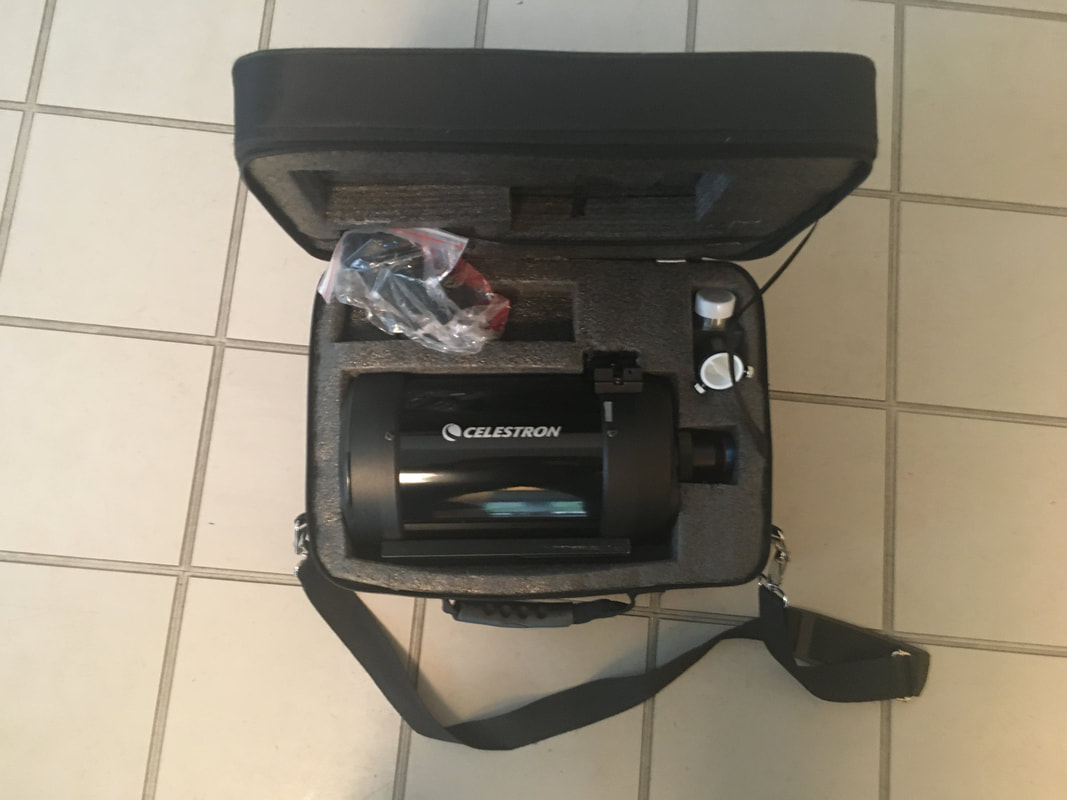
The Video Astronomy camera is packed in the telescope carry case. The hand controller is in the mount/laptop carry bag.  The plastic bin contains all the cables I need plus the SkyFi controller. 
​
In addition to the DS10c camera, the telescope case has room for the camera nosepiece, a 2” 0.5x focal reducer, a 2” filter and a small spare camera.
Picture
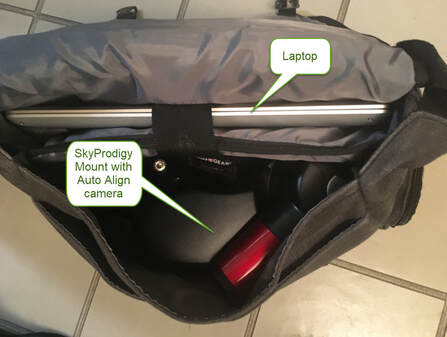
The mount/laptop carry bag holds the mount, my laptop, tripod tray and hand controller.
Picture
Picture
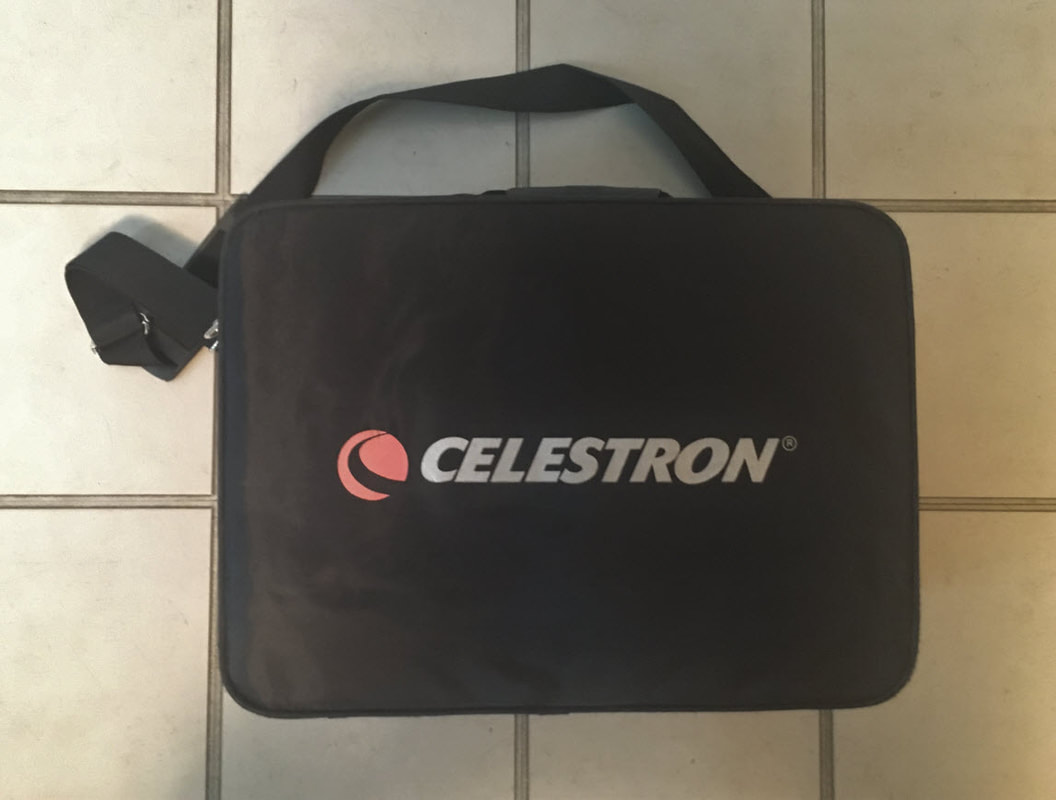
These cases make it easy to organize and carry everything you need for your RVA setup.
​


​Flexible

Instead of the MCR-80, I can take a Celestron 5” telescope that is also in a easy to carry case and fits nicely on the SkyProdigy mount.
Picture
Picture
 
I originally purchased the SkyProdigy 130 which comes with a great light weight 5” Newtonian telescope that is ready to go for Video Astronomy at F/5 with no need for a focal reducer and works great with Video Astronomy cameras. This telescope is not as compact but is easy to carry in its original shipping box. I have found the SkyProdigy mount is able to work with a variety of lightweight telescopes.    Here is a link to my original 2014 post about the SkyProdigy 130 for RVA …

a-good-beginner-telescope-and-mount-for-rva.html


​Super Power

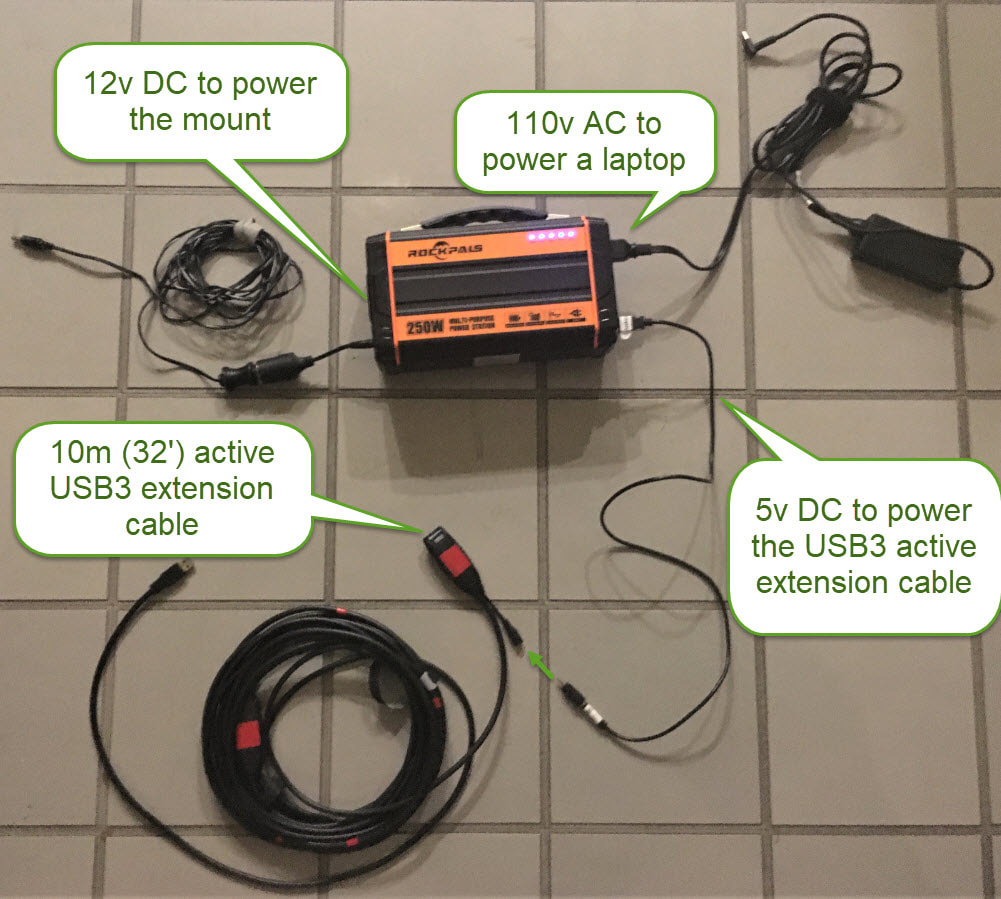
I have a Rockpals 250-Watt Portable Rechargeable Lithium Battery Pack for super portability. This battery pack supplies 12v for the mount, 5v for the USB3 active extension cable and 115v for my laptop while I am next to my telescope. Since everything is then completely battery operated, I can set it up anywhere. In fact, I used this at the Grand Canyon Star Party to power my Evolution mount and laptop since we were set up in a parking lot with no electricity.
Picture

​Video Astronomy anywhere

I am sold on using Video Astronomy for near real time viewing of the wonders in the night sky wherever we may go, whether I am next to my telescope or inside operating it remotely ... seeing objects in color and better than I could ever see looking through an eyepiece!

0 Comments

It’s the Most Wonderful Time of the Year…for Remote Video Astronomy

2/9/2020

0 Comments

 
By Matt Harmston
​Winter skies: (sometimes) Clear, cold, and mesmerizing.  The season always excites me, as I get to spend time with celestial favorites like the Orion Nebula (Messier 42), the Pleiades Cluster (Messier 45), and the Andromeda Galaxy (Messier 31). Whether using simple binoculars or exposing camera chips, these showcase items and many more beg for attention.  Funny thing, though…it’s hard to see clearly with frost hanging off the eyelashes.  How might we still enjoy astronomy without eyelids freezing shut?

​Remote Video Astronomy: Simple, Satisfying, Cold Defying
Picture
​When conditions become really unpleasant, I often transition my viewing into the house.  Remote viewing need not involve distant mountaintops, nor must you have professional grade equipment. Rather, I’m talking about controlling even a modest camera and telescope setup from inside…something about which I first read on a website owned by Jim Meadows (http://remotevideoastronomy.com/index.html).

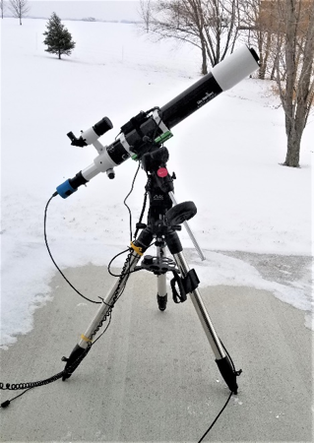
My remote setup is seen in the adjacent image: A 100mm SkyWatcher Pro ED refractor, Celestron AVX mount, and any one of my MallinCam CMOS video cameras connected to my laptop.  Sure…cables and computers make the setup sound complex. But, let me explain how my remote solution is designed. Before doing any viewing, I found a spot on the patio where I could plug the mount into an external outlet. ​

Picture
​
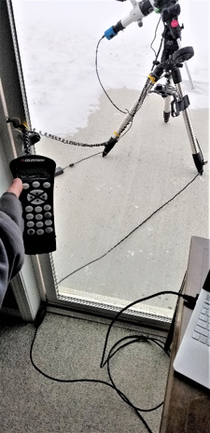
​Upon carrying the fully-assembled rig outside, leveling the tripod, and doing a polar alignment, I marked tripod foot location for reasonably reliable future placement. By doing so, I can avoid having to go through the polar alignment process each time.  From this location, I can snake the USB3 cable and mount handset through the patio door, gently closing it around the cables (gently…you don’t want to kink your cables!).

With no further PA required given my exposure times, each session is streamlined:  Carry the rig outside, place the tripod feet on their marks, plug in the cords/cables, and set my goto/viewing in motion.  Once set up, control of mounts and cameras is the same as if you were outside with frosted eyelids.  Of course, this solution doesn’t give a perfect, airtight fit for the door (a couple of pool noodles inserted in the vertical track can help with that). But, there’s not much room for cold air to sneak in. 
​

​

​With all the pieces in place, your viewing options are no longer limited by creature comforts. Still, we have to bear in mind limitations of our equipment. For instance, when slewing to a new object, I always illuminate the mount to determine if I must pause the slew due to cable snag or a camera contacting the tripod.  Also, bitter cold makes plastic brittle, thus putting cables at risk of being damaged if flexed too much.  For teardown on those frigid nights, I won’t coil up cables nor put much pressure on other plastics until things have warmed up in the house.  Similarly, electronics don’t always appreciate frigid temperatures, much less coming back into a warm, humid home. Thus, be sure to follow your typical post-viewing/condensation-mitigation routine.  When in use on really cold nights (for me, that’s below 10F), progressively worsening mount goto and/or tracking tell me that hot cocoa and a movie with my 4-legged observing buddy is a better option. 

​While remote video astronomy works nicely during our frigid winter months, it’s also quite handy during buggy, muggy summer nights. No sweat, no bugs, and no swollen bites go hand-in-hand with summertime remote video astronomy.   Granted, I prefer immersion under the night’s canopy to being inside, but in a cold (or hot) pinch, remote viewing is very rewarding.

In the End…
​
​Remote video astronomy can take on many designs, some more elaborate than others. My simple, functional approach serves my needs well.  And, it provides a quick, comfortable, safe way for all of us to enjoy clear skies regardless whenever they occur.  How might you engage in remote astronomy?  Give it a try…you just might enjoy it!


​
​
[NOTE: With Matt’s permission, I posted his article that appeared in the Feb, 2020 Cedar Amateur Astronomers newsletter. This is the first time I have posted an article from someone else.  It was such a good article about using a basic Remote Video Astronomy setup (in very cold weather) I asked him if I could include it in my blog.  It is a nice description, simple solution and easily repeatable. – Jim Meadows]
0 Comments

    Author

    Astronomy was my favorite hobby many years ago, but was gradually set aside due to work, family and life in general.  In recent years I resumed my hobby looking forward to using the new technology that is now available.  Then I discovered Video Astronomy.  Then I learned how to do it Remotely.  I wrote some books, and decided to set up this web site to continue to pass on what I learn.

    ​Jim Meadows

    Questions or comments?  Email me at:
    ​[email protected]

    NOTE: If you use Microsoft Edge and clicking on an Archives or Categories link below does not work, please try an alternate browser (e.g. Chrome).

    Archives

    March 2026
    November 2025
    September 2025
    August 2025
    February 2025
    December 2024
    August 2024
    April 2024
    February 2024
    October 2023
    June 2023
    September 2022
    May 2022
    May 2021
    December 2020
    October 2020
    May 2020
    March 2020
    February 2020
    July 2019
    June 2019
    May 2019
    January 2019
    December 2018
    November 2018
    October 2018
    April 2018
    March 2018
    November 2017
    October 2017
    September 2017
    August 2017
    June 2017
    April 2017
    March 2017
    January 2017
    December 2016
    October 2016
    August 2016
    July 2016
    May 2016
    April 2016
    March 2016
    February 2016
    January 2016
    December 2015
    September 2015
    August 2015
    June 2015
    April 2015
    March 2015
    January 2015
    December 2014
    November 2014

    Categories

    All
    Accessories
    AGc / AGm
    Articles By Others
    Astrophotography
    Auto Align
    Auto Center
    Auto-center
    Build
    Commentary
    DS10c
    DS2.3+
    DS26cTEC
    DS8300cTEC
    Eclipse
    Focal Reduction
    Hyperstar
    LHDR
    LPP
    Mallincam Micro
    MallinCam Netbook Kit
    MallinCamSky
    MallinCam X2 / XT
    MallinCam Xterminator
    Miloslick
    Mmec Software
    Permanent
    Pier
    Portable
    Pro Dob 2
    RASA
    RVA
    SharpCap
    SkyBT
    SkyFi
    SkySafari
    SkyShed
    Software
    Solar Viewing
    Star Parties
    StarSense AutoGuider
    Starter Telescope
    Stellarium
    Video Astronomy

    RSS Feed

Web Hosting by Domain.com